
10 Days in Peru
Macchu Pichu September 2024
Introduction
For me this was a long-awaited trip. I had originally booked to go in September 2020 (and of course we all know what happened that year ……) I’d also been learning a few months’ worth of Spanish and was keen to test that out. Well, the basics anyway.
The flight was with Iberia via Madrid as i wasn’t keen on transiting the USA with their notoriously awkward customs officials. My brother nearly missed his connection from New York to Lima a few years ago for that reason. I landed in Lima at 6am after an overnighter and got a shuttle to Miraflores (the suburb where most tourists stay, full of Western style bars cafes and hotels).
I had a night booked at “Kaclla the Healing Dog Hostel”. This sounds kind of spiritual, but it wasn't really. There was a family with young kids staying there, which was cool. Also, they offered a free walking tour of the city centre.
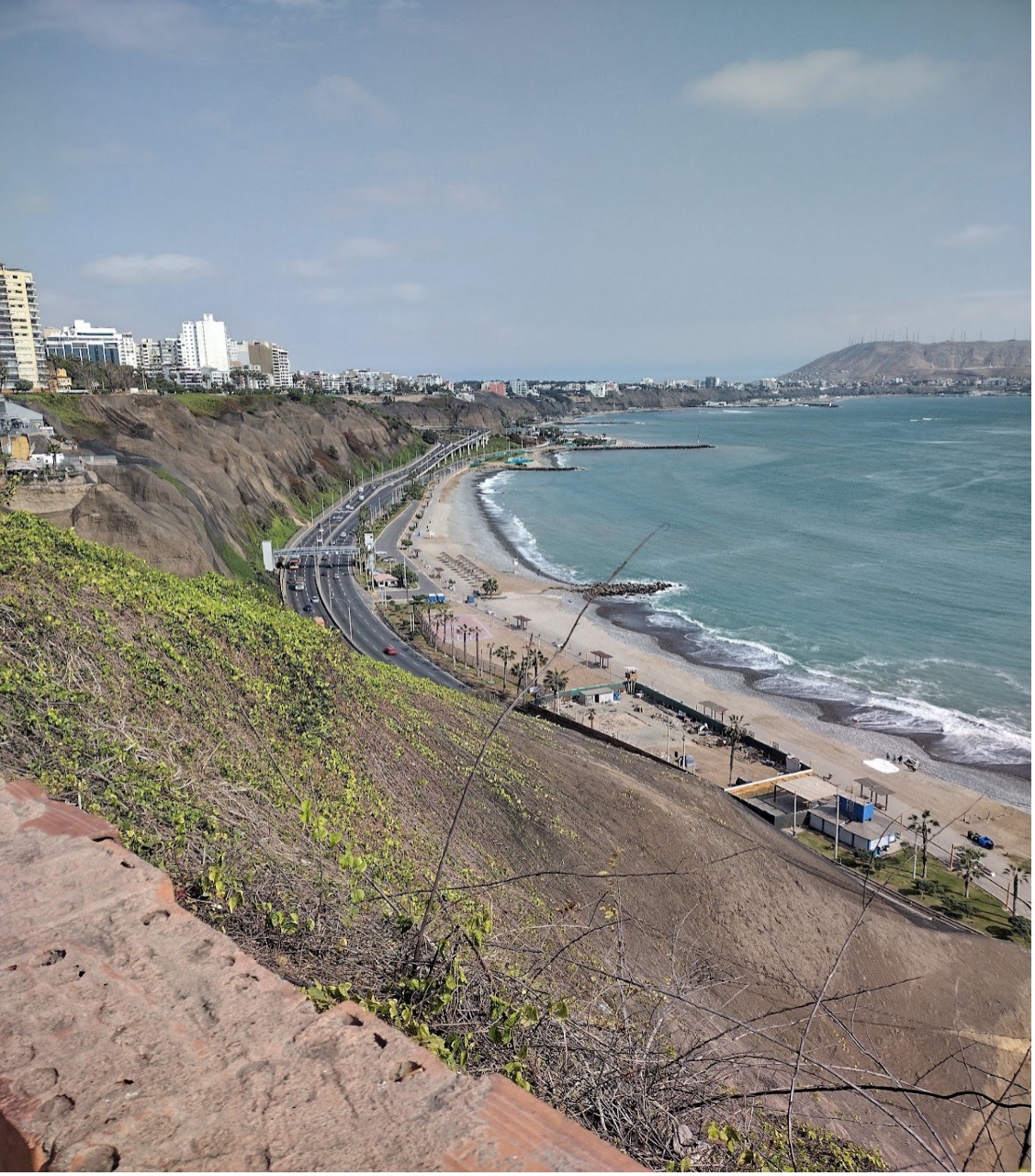
Miraflores, overlooking the Pacific Ocean
Day 1 - Lima
I joined the walking tour at midday. There was me thinking that we’d be picked up and taken to the city centre in a coach …… nope, we were local bussing it! “Be careful with your bags, keep them in front of you and cover your pockets” said our guide. “Most people on this bus are fine, but you never know”. Hmm ….. okay. So, ten slightly nervous minutes later, we got off the overcrowded bus and went into the historic centre.
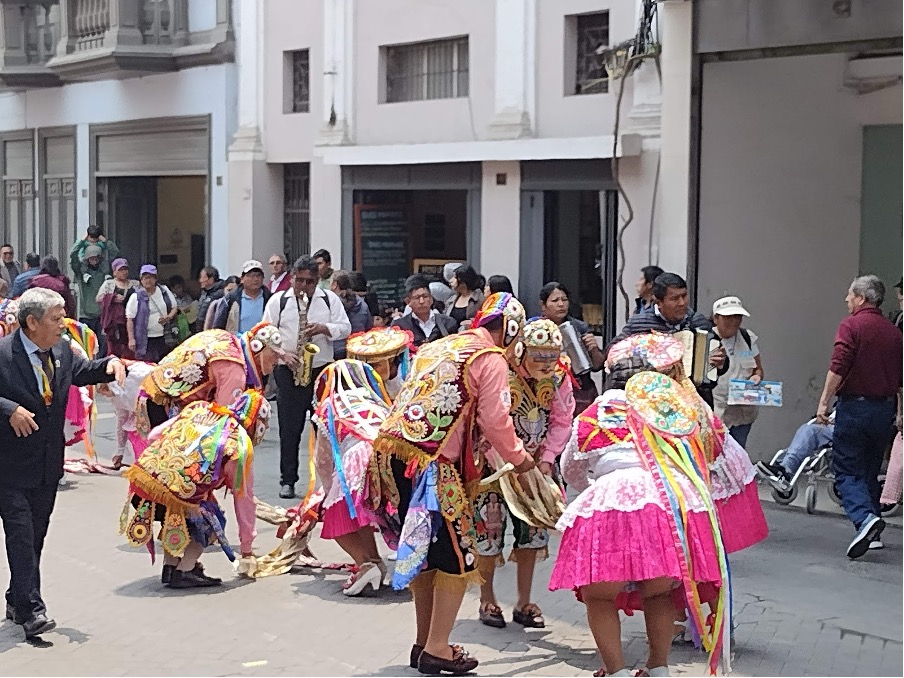
Traditional procession in the historic centre
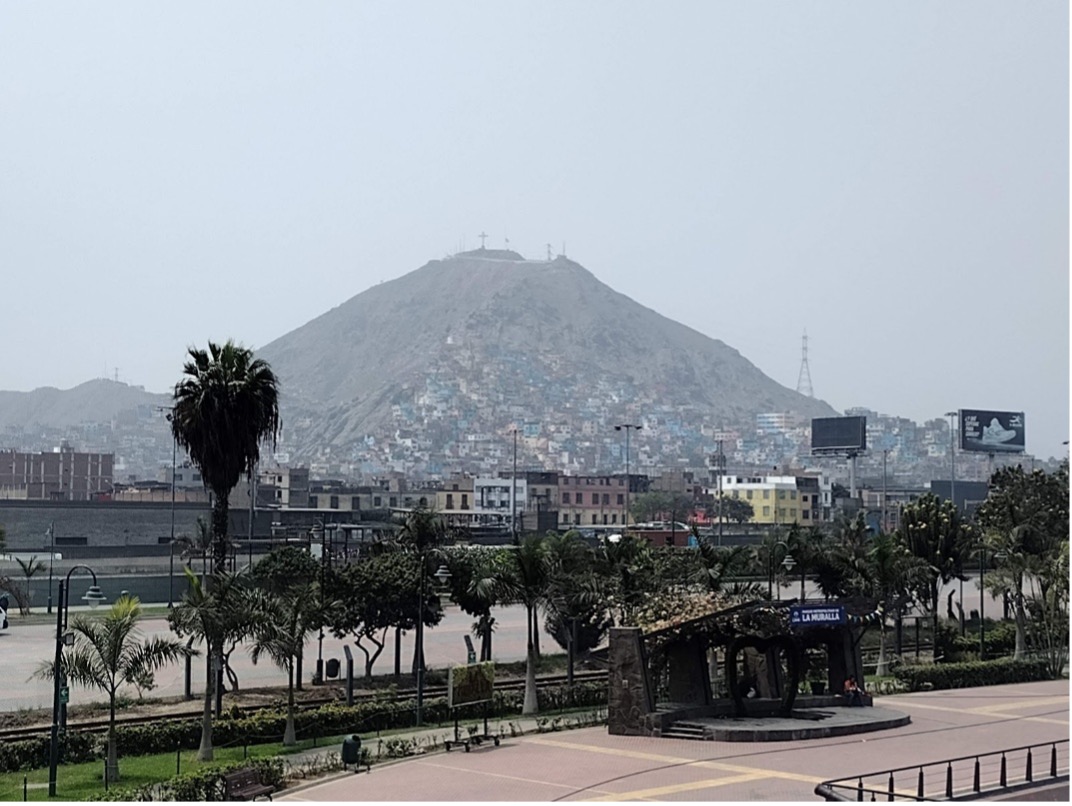
A shanty town, or “pueblo joven”, spread out over the hill.
In Brazil it would be called a “favela”
After doing the tour of the obligatory city squares and churches (some impressive, others less so), viewing a shanty town (from distance) the tour finished and (being knackered from only a few hours sleep on the plane the night before) I was happy to have some quiet time. In the evening I went for a walk to the clifftop parks at the seafront in Miraflores where they had a live DJ playing house music in a small amphitheatre to a crowd of 200 or so.
So, what did I think of Lima? Well, it was ok, if a bit meh. A big city without the glamour and lifestyle of Rio or the natural beauty and history of Cape Town, but with poverty and crime to match both. You can see the old town in a half day, and Miraflores does the job for sleeping and eating. Was keen to push on to Arequipa the next morning.
Days 2 to 3 - Arequipa
Whereas Lima is at sea level, and Puno at just under 4,000m altitude, Arequipa at 2,300m is the ideal place to acclimatise for a day or two in between. I caught an early flight from Lima and made for the Monasterio de Santa Catalina (Monastery of St Catherine) in the early afternoon. This is a convent in the city centre where nuns have lived since the 16th century. While they can hear the goings on of the city outside the walls, they are hidden away from it and have no contact with the outside world. The monastery is very colourful with whites, reds and blues everywhere.
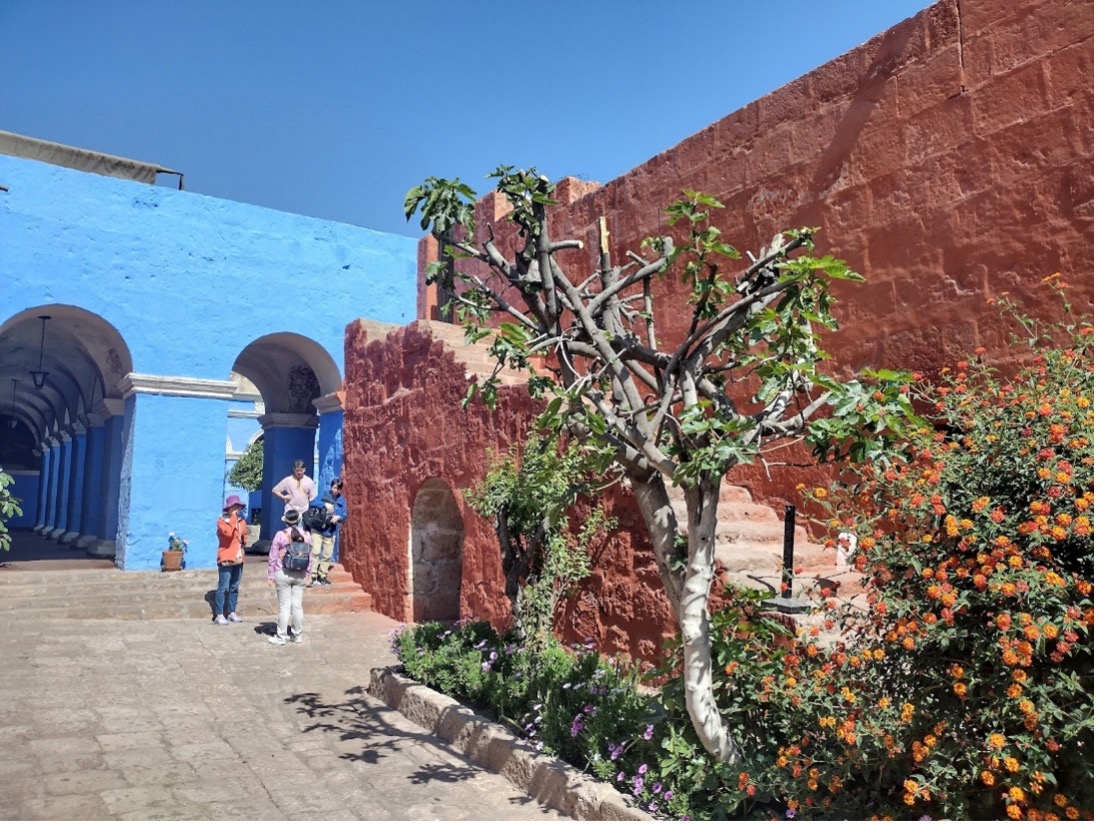
Monasterio de Santa Catalina
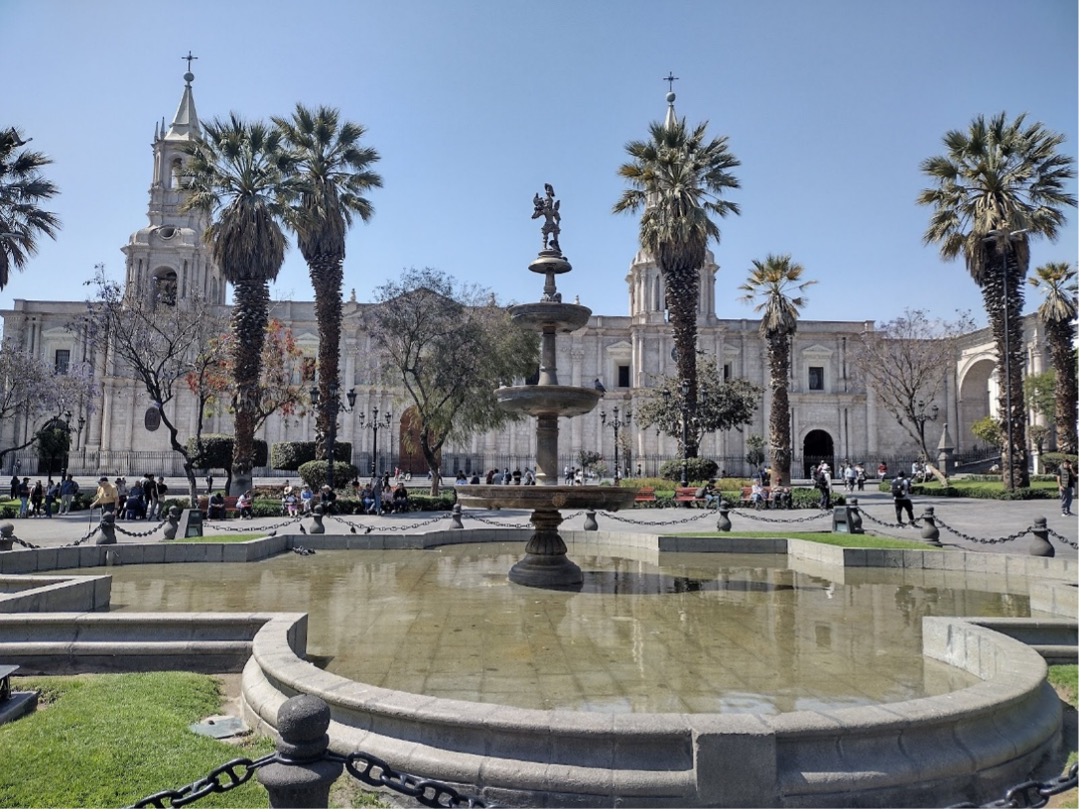
Plaza de Armas, Arequipa
Arequipa has a big square with the cathedral at the head of it (as most Peruvian cities do - they're usually called Plaza de Armas). It's an impressive sight, especially in the evening when the lights come on and the locals sit in the square people watching. There are countless other colourful buildings that the Spanish built in the streets surrounding the square. All watched over by the volcano known as El Misti.
The next morning, I wandered round the city centre taking advantage of the lovely spring weather and visiting a few museums, the most interesting one containing the mummified corpse of Juanita, a young girl (believed to have been 13) sacrificed by the Incas roughly 500 years ago at the top of a nearby mountain. She was clubbed to death with a single blow, and apparently this was a great honour for the family as she immediately went to join the gods. Her corpse was discovered in 1995, and others have since been found too.
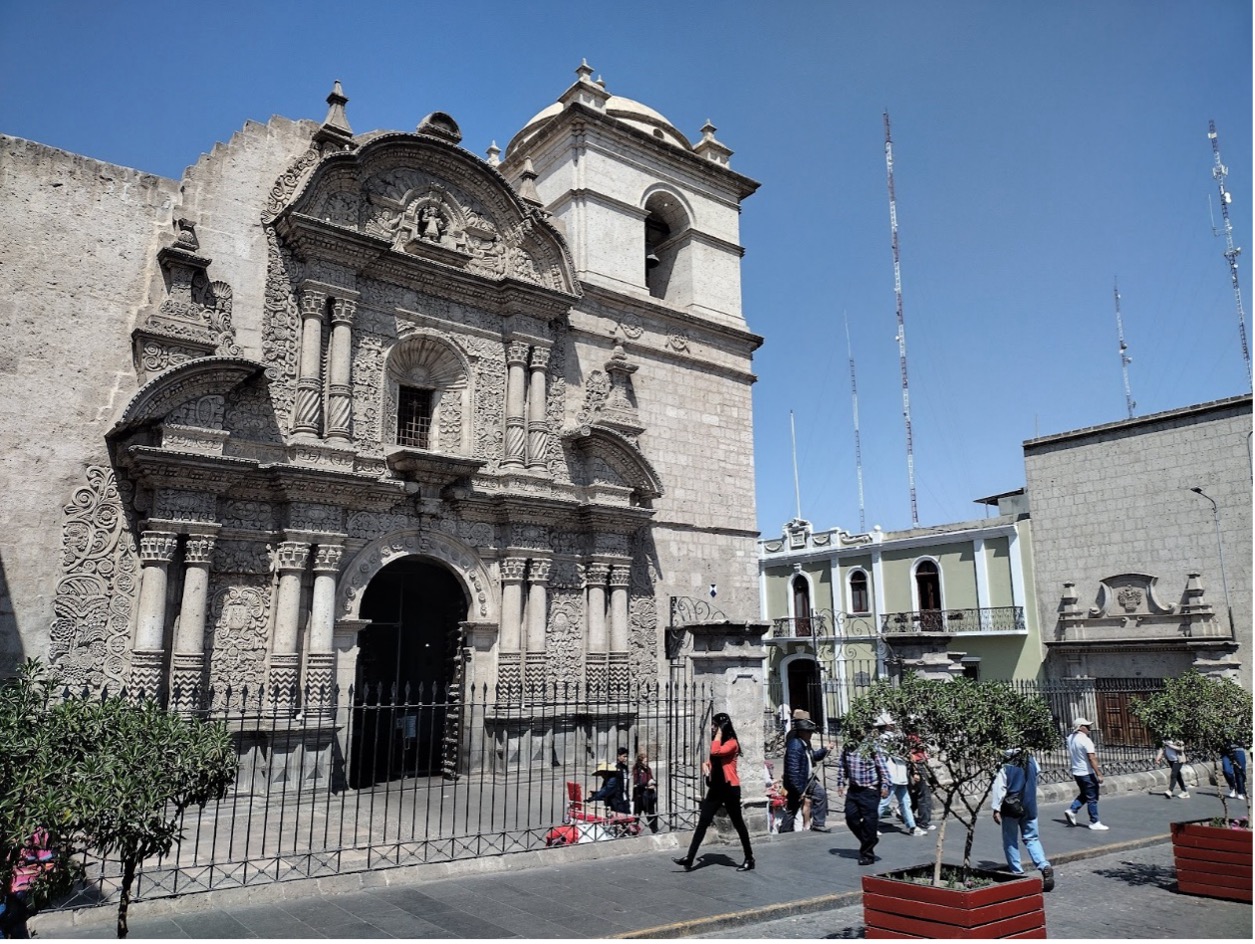
Church just off the main square in Arequipa
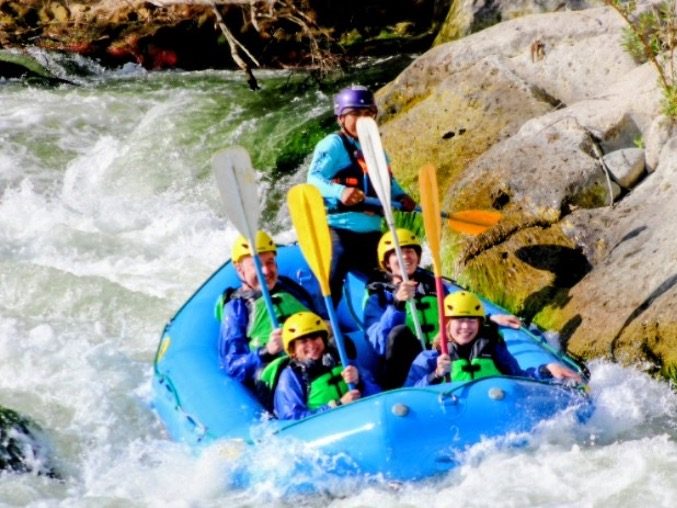
In the afternoon, I was hoping not to suffer the same fate in the local river - I’d never done rafting before but was assured that the grade 2-3 river wouldn’t be too terrifying! There was a group of about 12 of us, some couples, some friends, and some solo travellers, and we were split into 3 boats of 4. This cost me about £20 (much cheaper than Cusco, or anywhere else I’ve seen for that matter) for about 1.5 hours rafting. We managed not to capsize although some of the drops were a bit scary!
Arequipa is very safe to wander around, even at night. Unlike Lima, there are no dodgy areas in the city centre. It's also a small enough centre to walk around easily. Personally, I loved the city and was happy I hadn’t skipped it.
Days 4 to 5 - Colca Canyon
Early start to be picked up on a group tour to the canyon. You take a bit of a chance with group tours. I tend to do short ones as my holidays are all about variety, and if you get a bad group the thought of being stuck with them for 2 weeks doesn’t appeal! The people here were okay but there was not the more open/friendly vibe that I’ve found you tend to get for example with hiking groups.
Anyhow we had a quick stop to buy some coca to help with the altitude sickness. Coca is grown in the Andes and is the base product for cocaine, however in its initial form it’s all perfectly legal and regularly used by locals. You can buy it in all sorts of product formats. I bought some coca sweets whereas others bought the leaves to chew on. You can also get coca tea in practically every cafe in the Andes. There’s no doubt it works though. As we drove up to 5,000m through the Valley of the Volcanoes i had a fairly clean head and managed a walk on the flat without any issues.
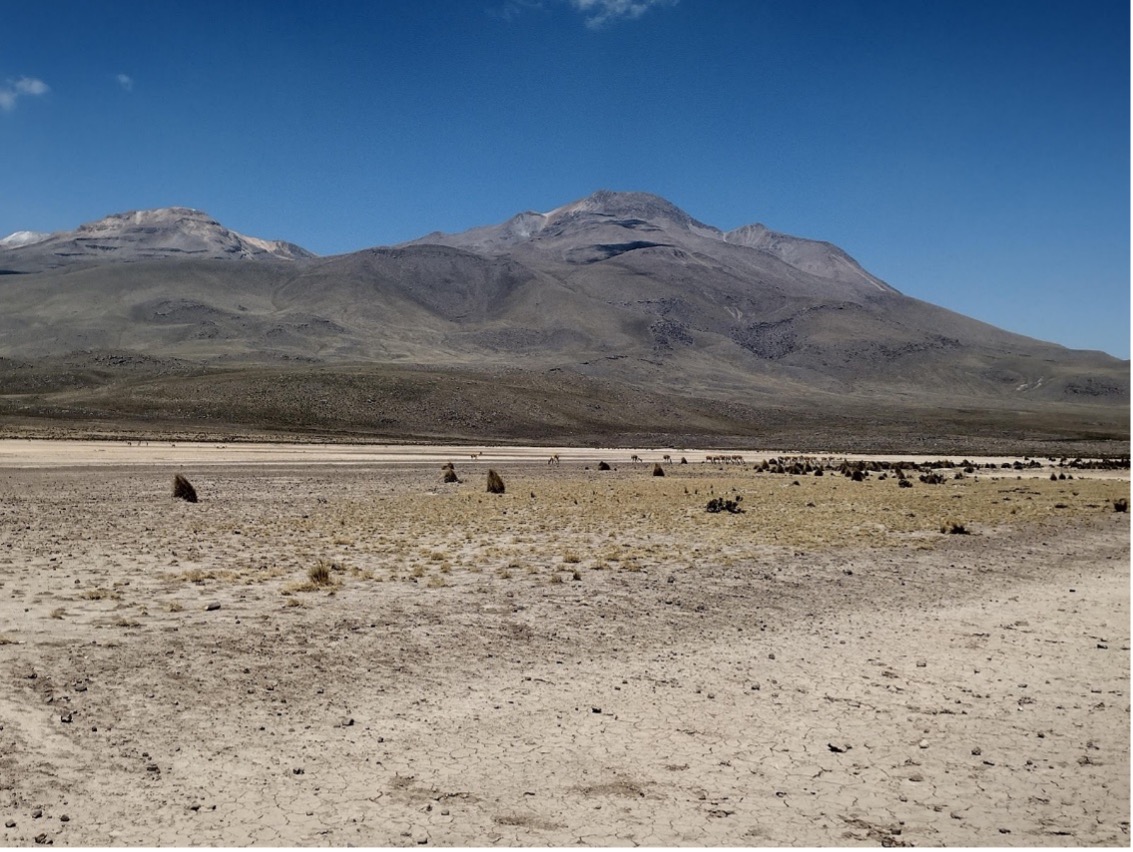
Valley of the Volcanoes
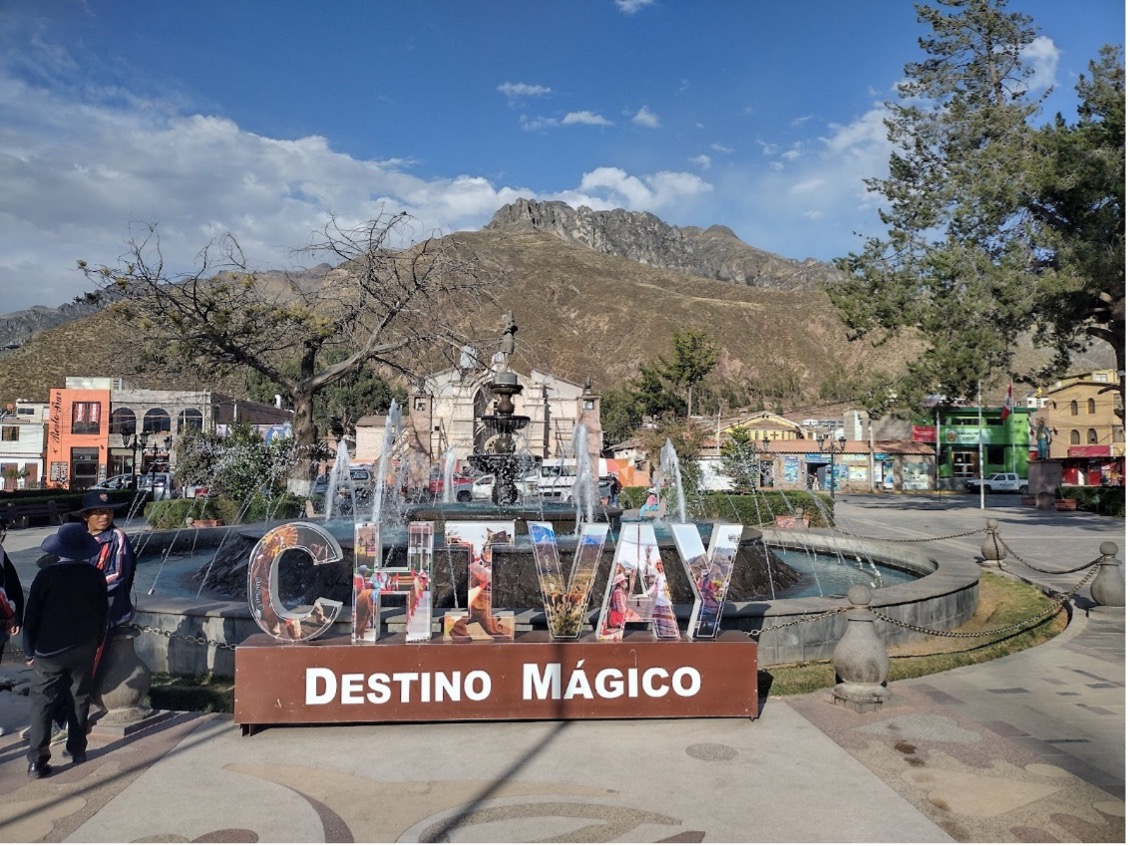
The main square in the village of Chivay
After stopping to meet some llamas (with photo opportunities!) we got to Chivay which is a typical Peruvian mountain village within the canyon where we spent the night.
In the morning, we went out into the canyon to the condor viewpoint and managed to spot a couple of condors flying above. The canyon itself is stunning and well worth the long journey from Arequipa. I wouldn't go on a day trip though as it would be too rushed (plus you’re up at 3am!) - you need either a 2 or 3 day trip. It's also popular to hike to the bottom of the canyon, stay overnight and then walk back up the next day.
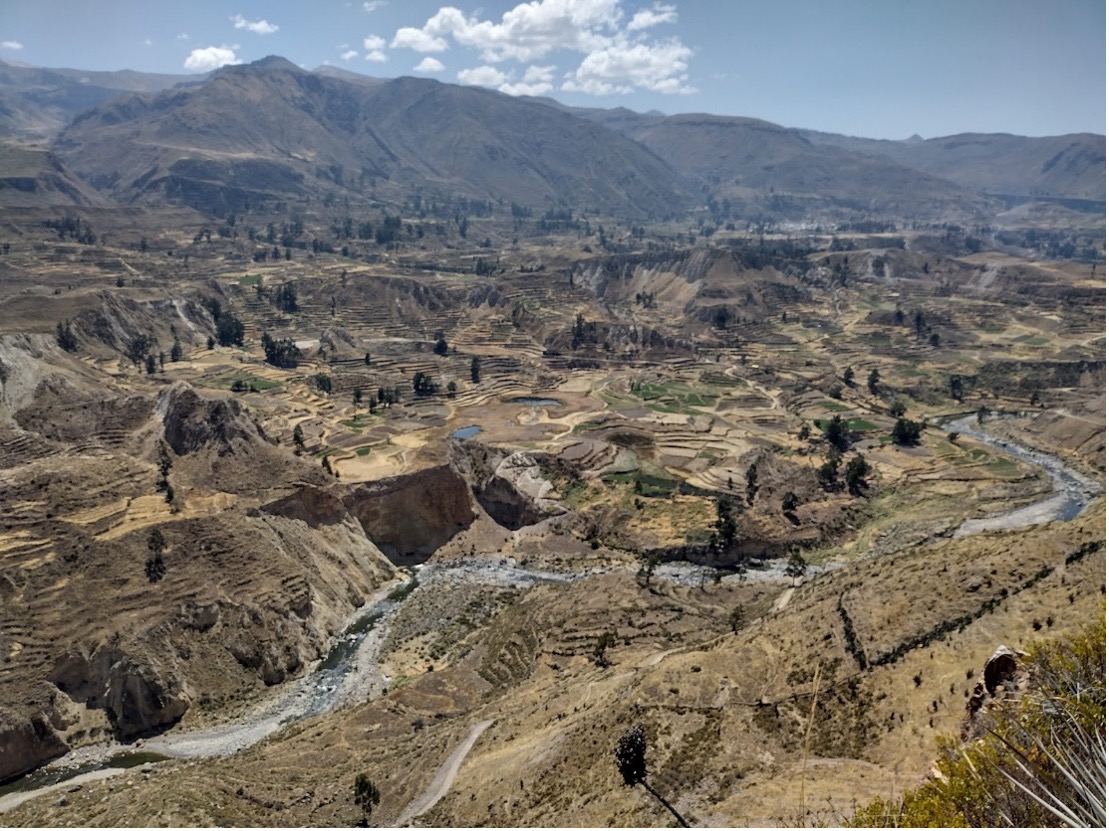
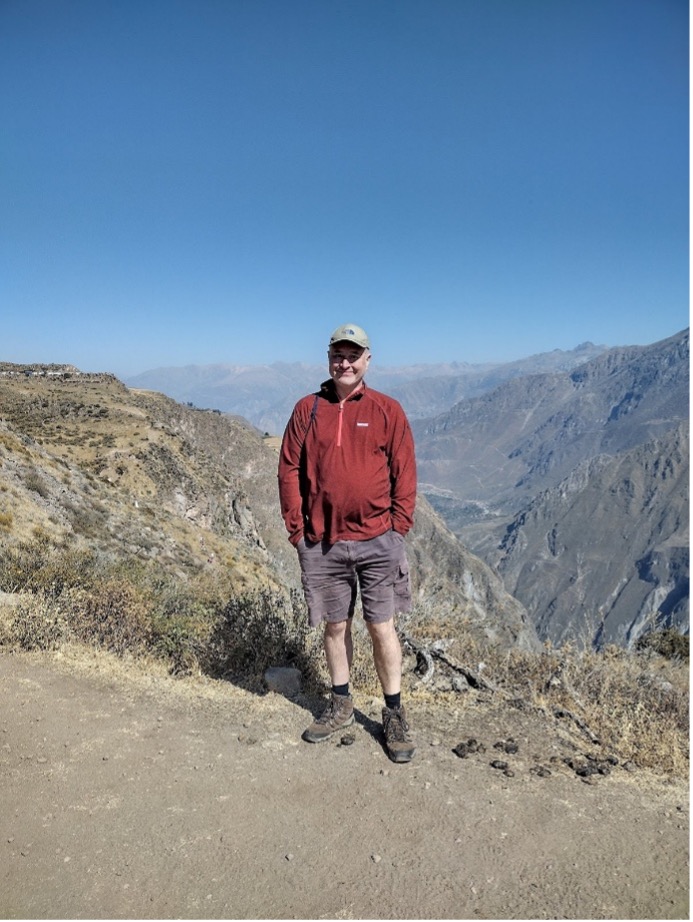
After lunch (and a couple more villages and viewpoints) the group split, as some of us were going back to Arequipa and some (me included) were heading to Puno. A long bus ride through isolated mountain roads brought us into Puno that evening, where there was a torrential storm to greet us!
Day 6 - Lake Titicaca
Puno was the highest sleeping point of my trip at 3,950m. Despite this I had no problem with the altitude. Puno was more pleasant than the guidebook and internet suggested (apart from some bloke in the street who told me off for wearing shorts. Not sure what that was all about!)
In the morning, I got picked up for the day trip to Lake Titicaca. Whether you enjoy this place depends very much on how you view the trade-off between stunning views vs commercial tourist traps.
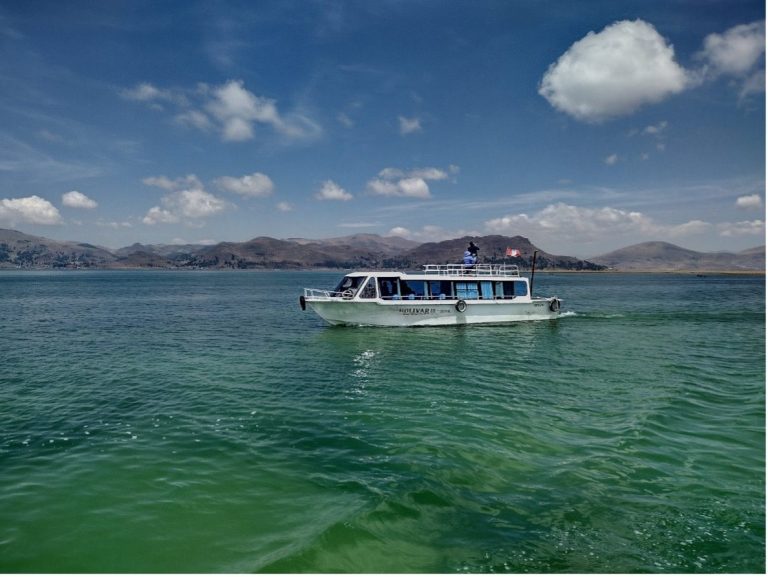
Lake Titicaca - The highest navigable lake in the world
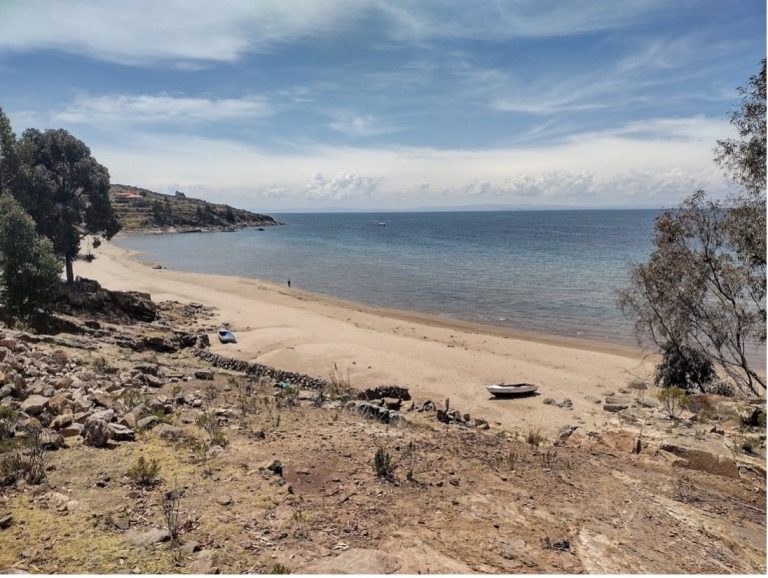
Beach on Taquile island
The good first. You have the beauty of the lake and the islands. The air is clean; the lake is a gorgeous blue. The man-made reed islands of Uros are an amazing accomplishment of the local people. The scenery on Taquile is great too.
And now for the downside. The mass market tour with some locals doing a very bored looking dance for about 2 minutes, then we were half-heartedly encouraged to join in (no thanks), and of course, give a tip. Also, this was the only time in Peru where I felt like I got the hard sell to buy crafts at three to four times what they'd cost back in Puno, by people who actually live in Puno and travel to the islands each day and pretend they live there.
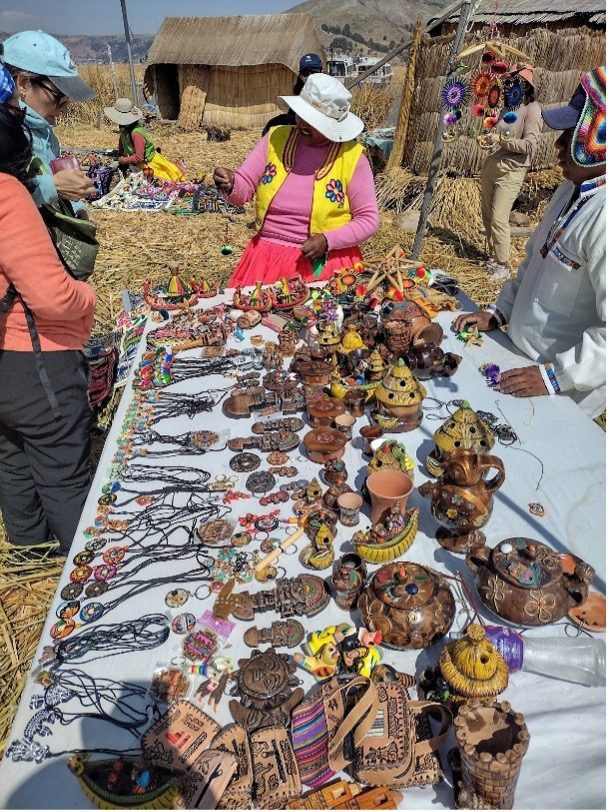
Please buy my tat!
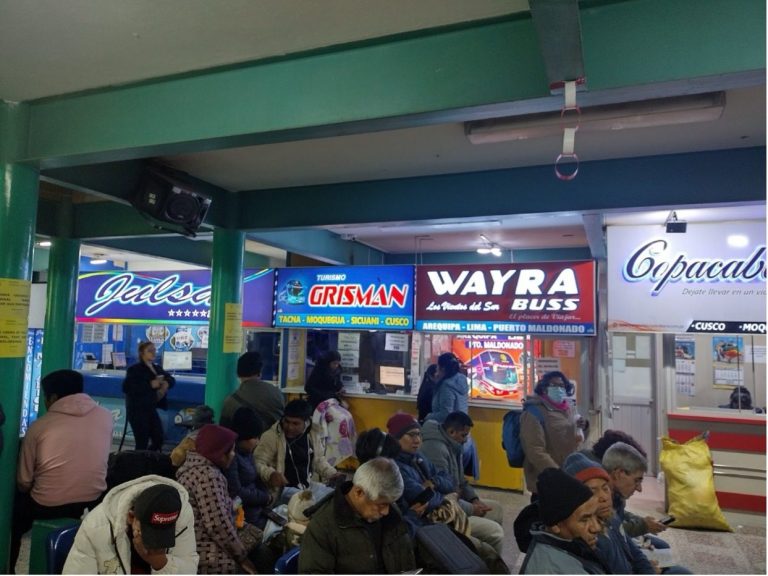
The busy bus terminal
After we got back to Puno I had a look round the cathedral and a small museum about coca and traditional costumes and then went to get the night bus to Cusco. The station was just like the ones you see on BBC’s Race Across the World with the many ticket counters.
Day 7 - Cusco
After a really comfy bus ride I woke up in Cusco bus station at about 6am and got a taxi to where I was staying. This room was costing me about £12 a night (a bargain for such a popular city) and for that price of course it was basic, but the owners were amazing and gave me access to the room at 7am!
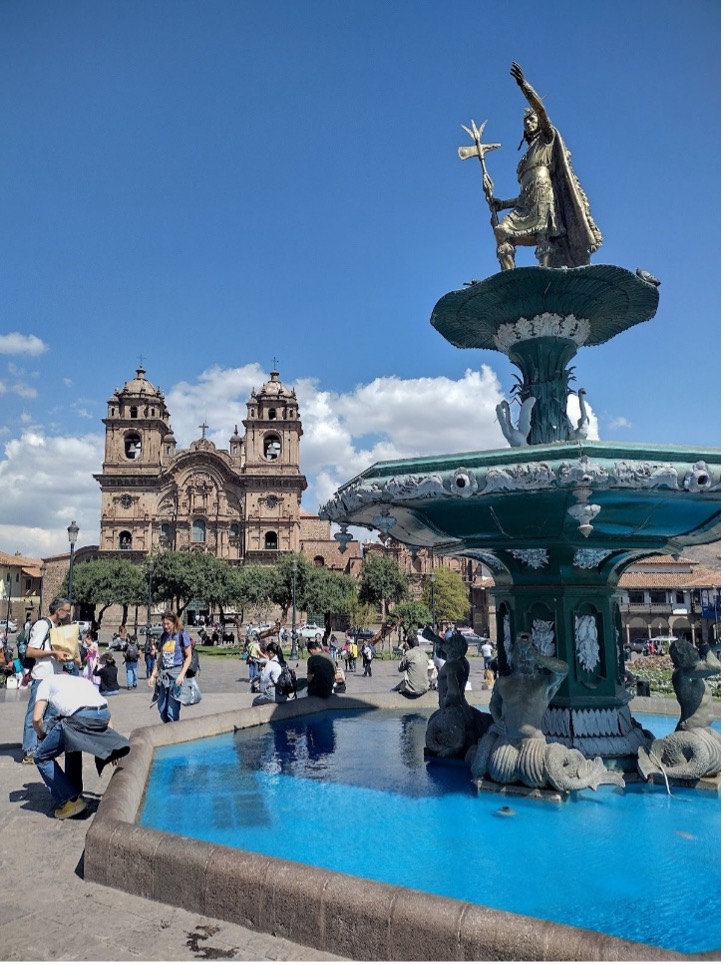
Plaza de Armas in Cusco
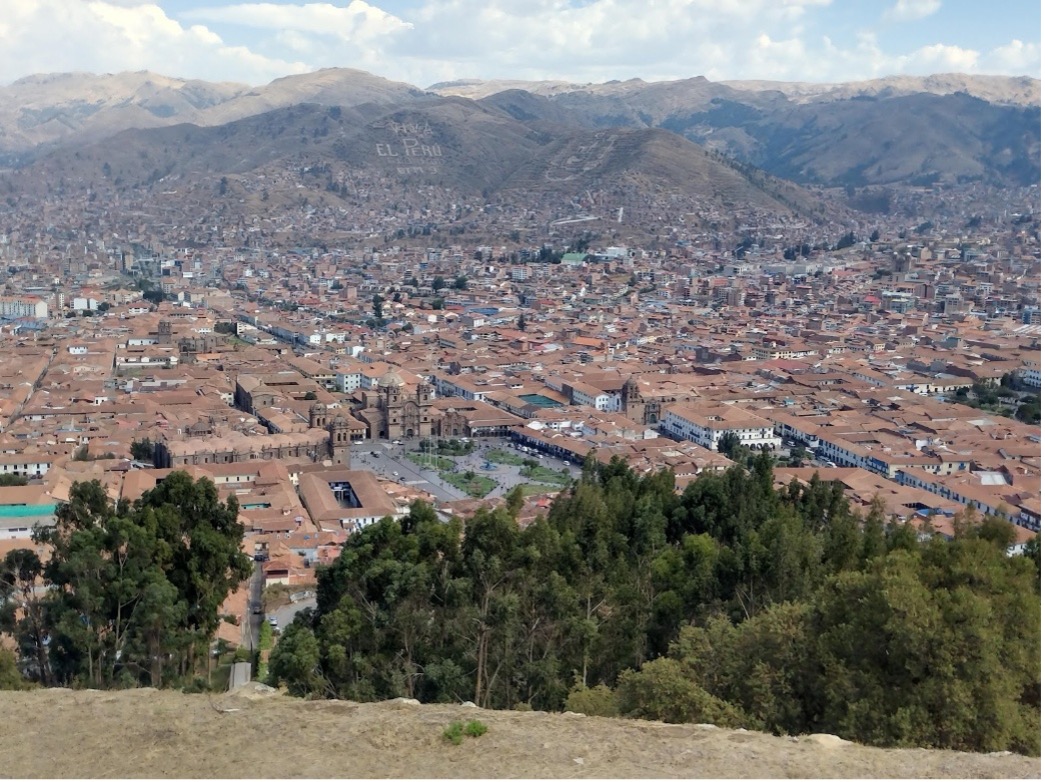
After 3 days of being part of group tours it was lovely to get some time where I could explore solo at my own pace and stop in cafes along the way. The city is the original heart of the Inca civilisation, and the Spanish (despite being pretty brutal to the indigenous population) added some stunning architecture.
After visiting a couple of museums in the city centre I climbed the hill up to Sacsayhuaman (pronounced something similar to “sexy woman”), a defensive citadel built by the Inca. It was quite a tough uphill walk, but I was more acclimatised now to the thin air.
This was the site of a huge battle in the 1500s between the Incas and the invading Spanish conquistadors. Somehow, these stones fit together perfectly without mortar. How they managed to lift them all those hundreds of years ago, I have no idea.
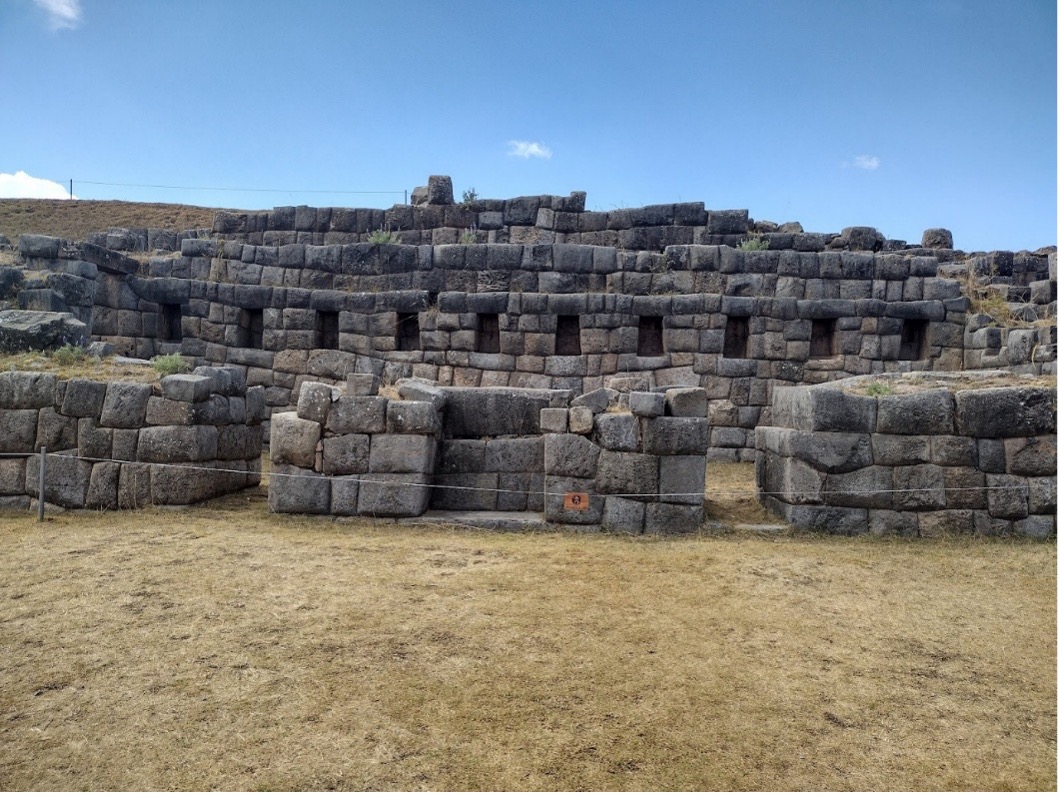
Sacsayhuaman
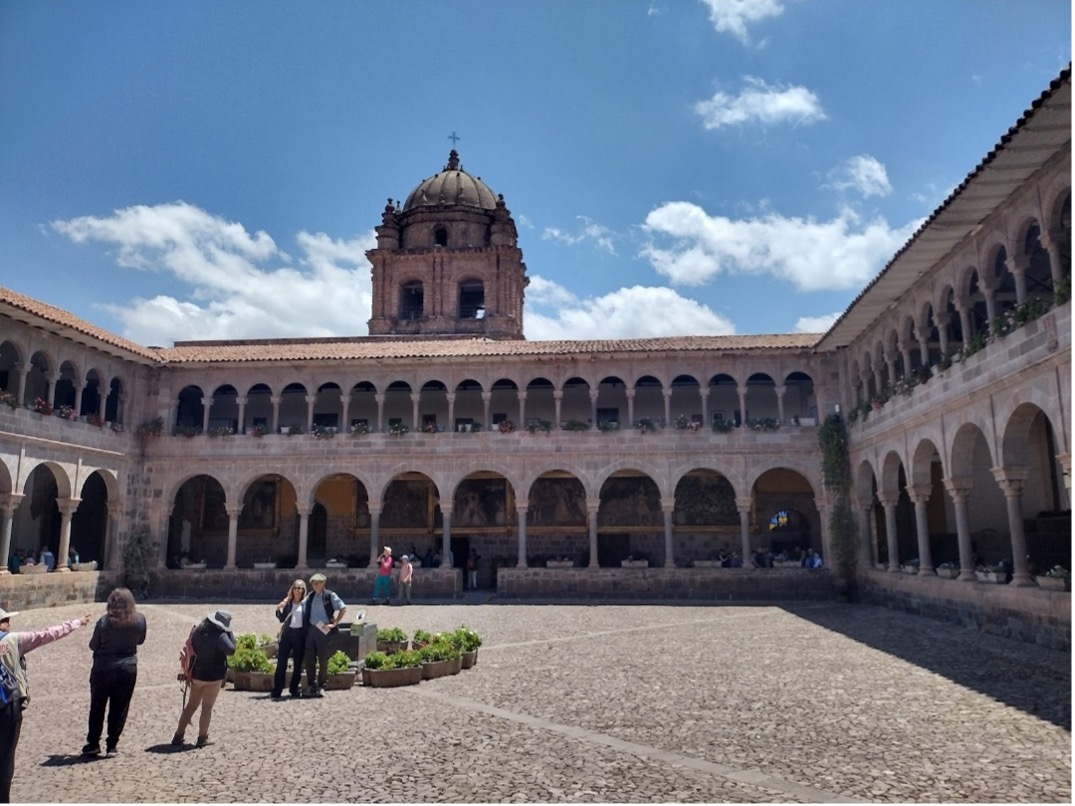
Courtyard of Q’orikancha, a Spanish church built on top of an Inca temple in the centre of Cusco
Cusco is a stunner and I could have spent more days in the city visiting everything. But an early night was needed as tomorrow was the “big one”.
Day 8 - Macchu Pichu
A 3am wakeup for “the wonder”, as the guy in An Idiot Abroad would say. Bus to Ollantaytambo followed by train to Aguas Calientes (the nearest village to the site and also known as Machu Picchu Pueblo).
The train journey was scenic, and I made friends with some Malaysians I was sat next to. Then half an hour on a local bus that winds up to MP itself. A long and expensive journey, this better be worth it!
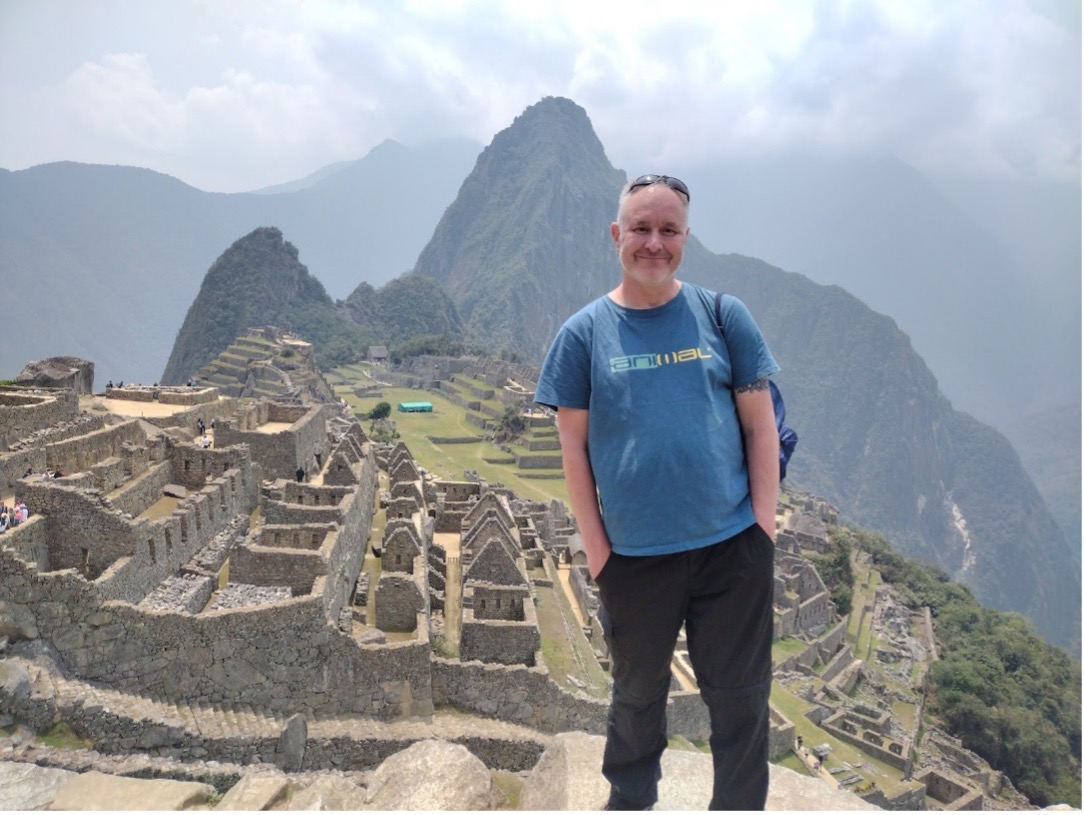
View from the start of Route 2
Of course it was worth it. My group of 4 all took infinite photos, as you should when you may never come back. There were tourists there, obviously, but not as many as I thought there would be, and nothing took away from the grandeur of the views. Food and drink was pricey and average both at the site and in the village, but that's totally to be expected.
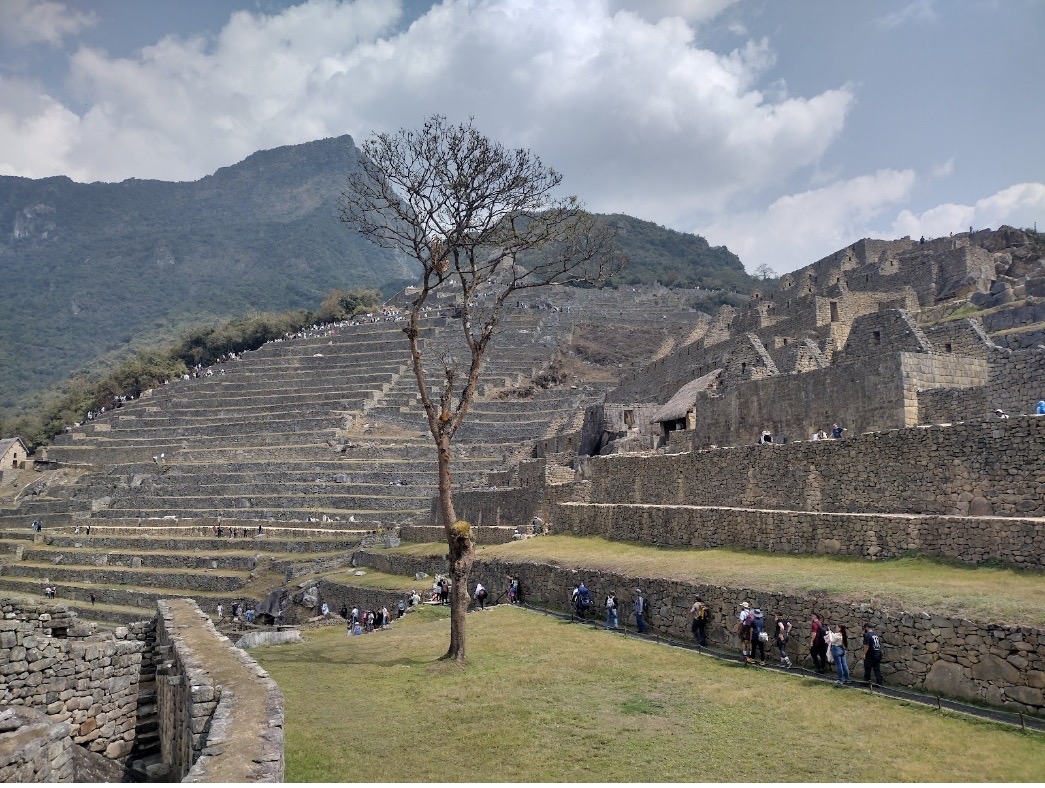
Inca terraces
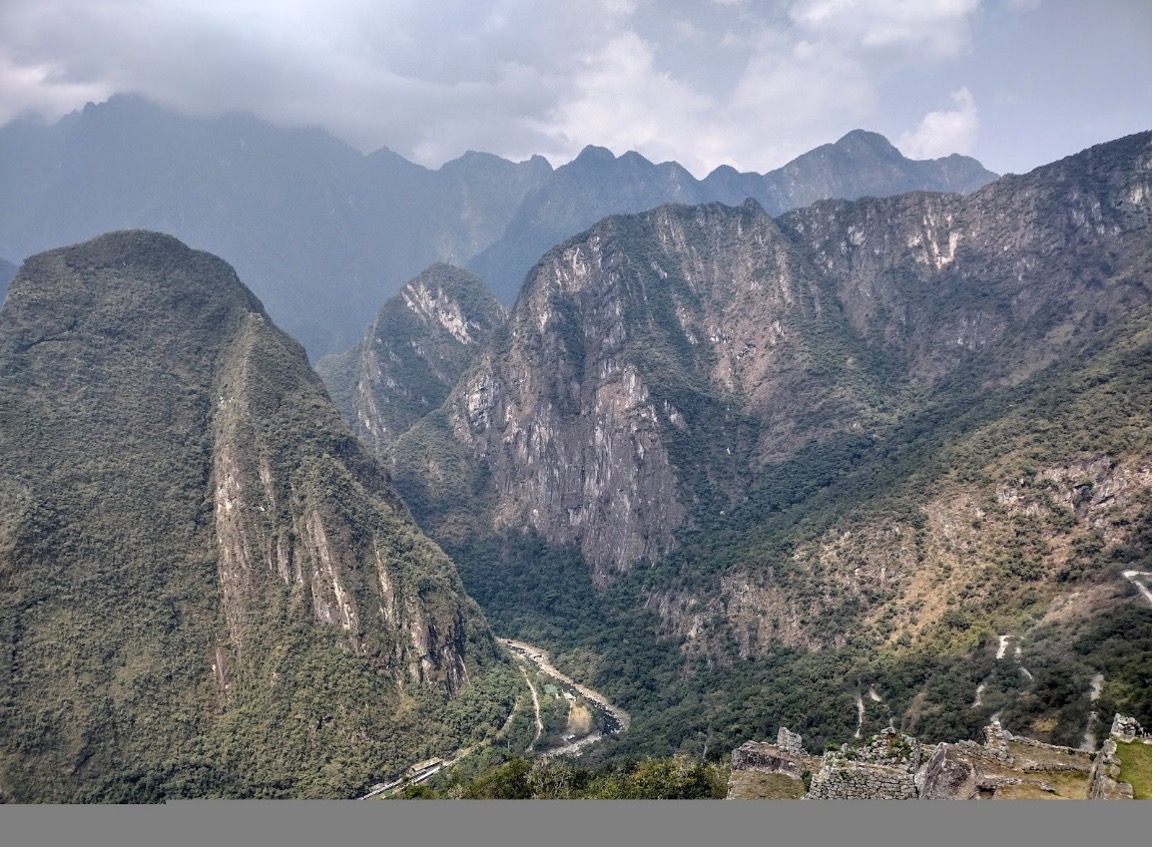
Looking away from MP at the mountains
After being abandoned by the Inca, Machu Picchu (meaning Ancient Mountain) lay undiscovered in the jungle until 1911 when the American explorer Hiram Bingham came across it while looking for a different site. Everything was intact, as the Spanish conquistadors (who looted a lot of other sites) never knew of its existence.
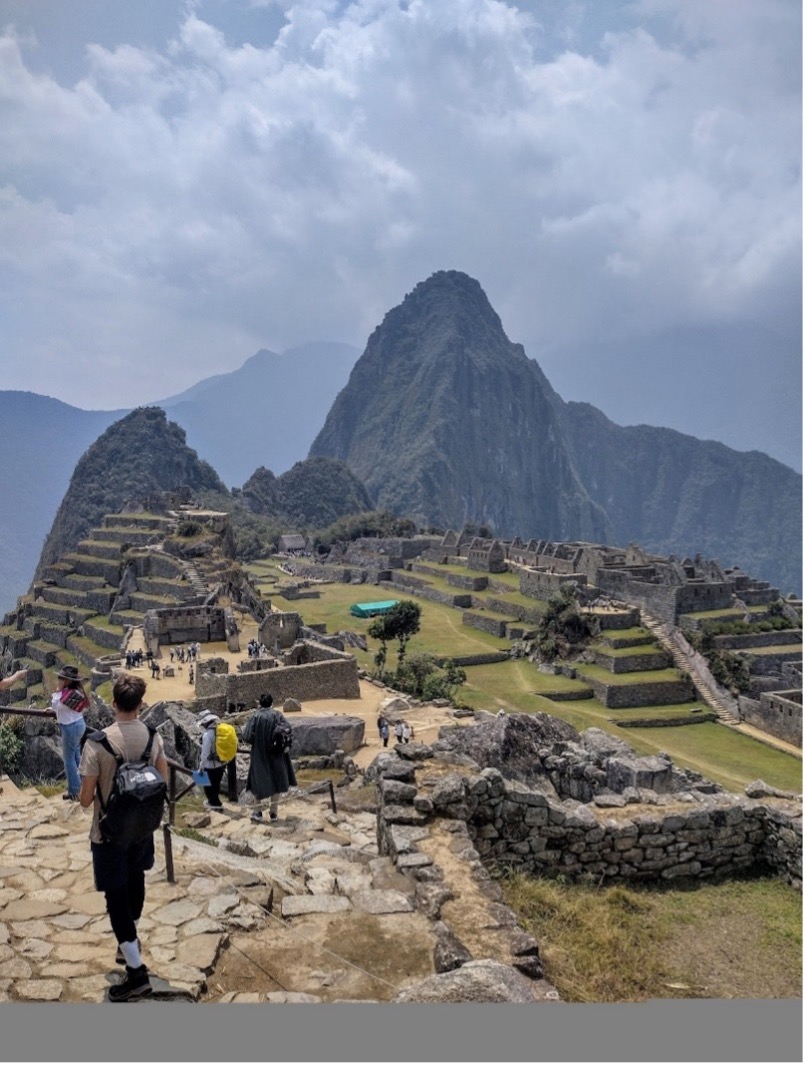
The reverse journey of the morning got me back to Cusco about 10pm and then it was a case of getting to sleep ready for Rainbow Mountain the next day!
A good tip would be to wear long trousers, as there are a lot of sandflies. Someone noticed my bitten legs the next day and said ah, you must have been to Machu Picchu!
Day 9 - Rainbow Mountain
I had only booked this tour a couple of days ago as I wasn't sure whether to do the Humantay Lake hike or the Sacred Valley tour instead. Online reviews of Rainbow Mountain varied from “incredible” to “overrated”. I decided to give it a go. Most tours leave at 3am but given the full-on previous day I had at Machu Picchu, I managed to get on one that left at 8am. Much better!
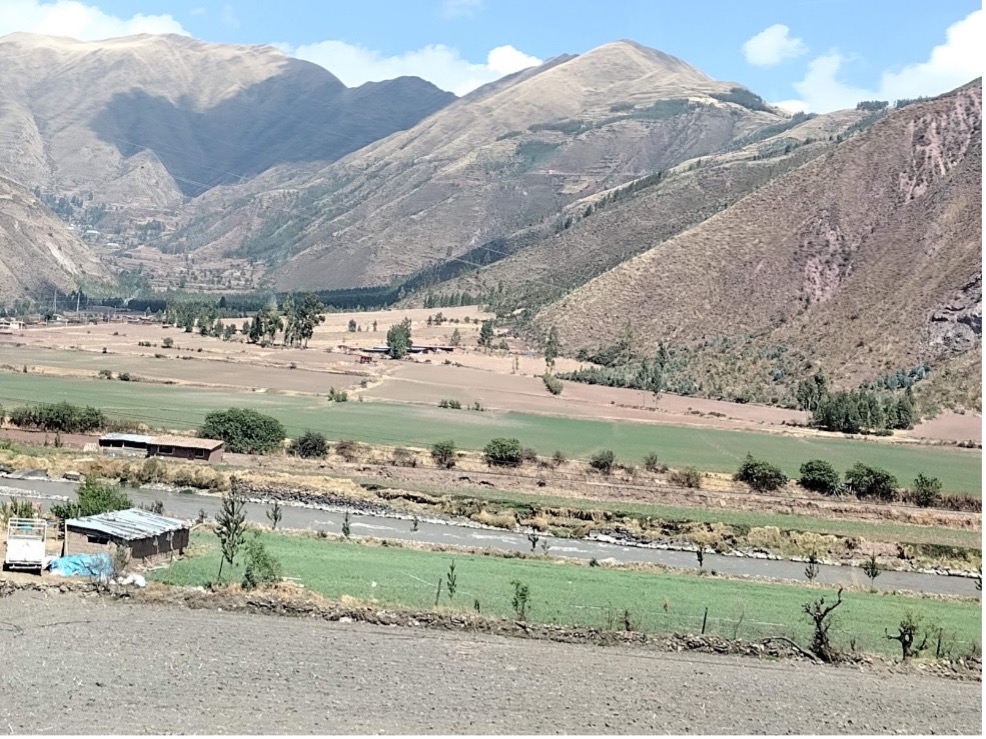
Typical scenery on the drive to Rainbow Mountain
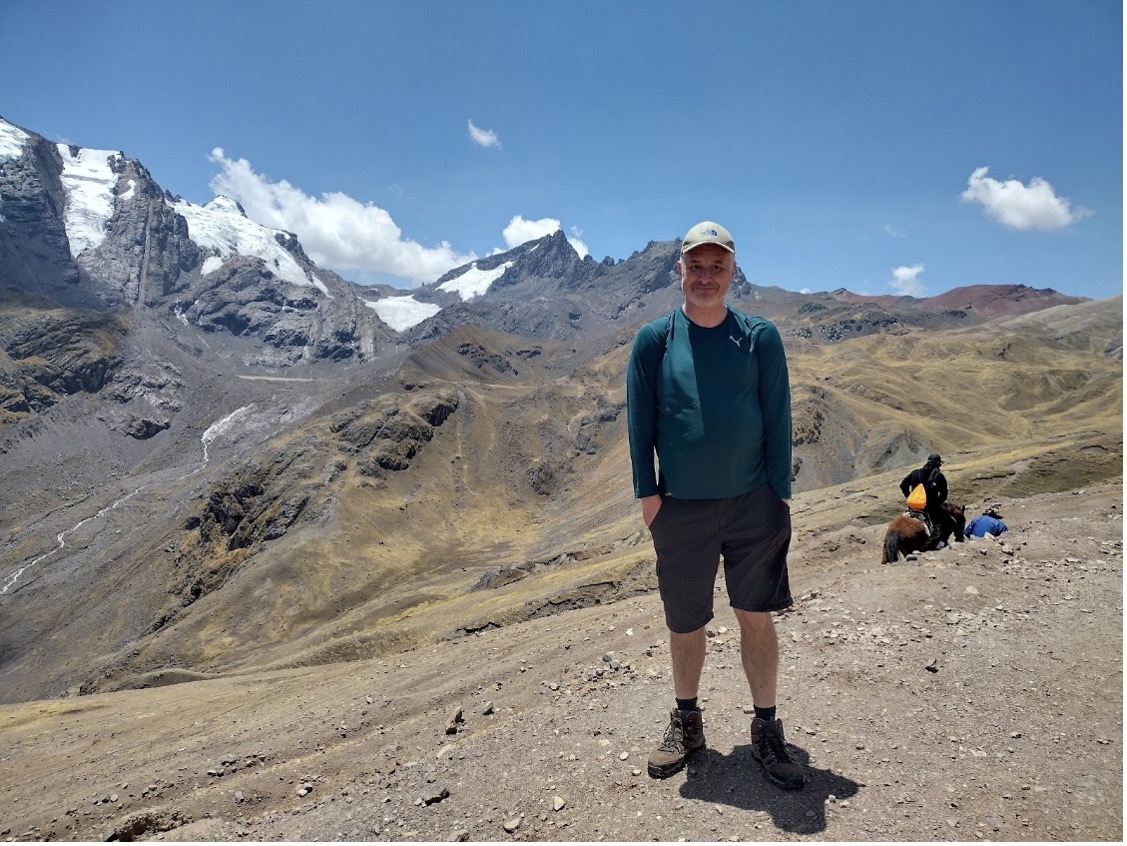
Ready to start walking
After driving for quite a few hours on gravel tracks past isolated mountain villages, we came to the start of the trek. All the 3am folks had finished on the mountain and gone, so it was nice and quiet. Personally, I didn't understand why most tours felt the need to go so early, but it worked in our favour.
We had to walk up 400m from the car park to the viewpoint at 5,000m. It wasn't too difficult after spending a week at altitude. It was cold, but the sky was blue and visibility was excellent. I found it helped to walk zigzag across the steepest bits.
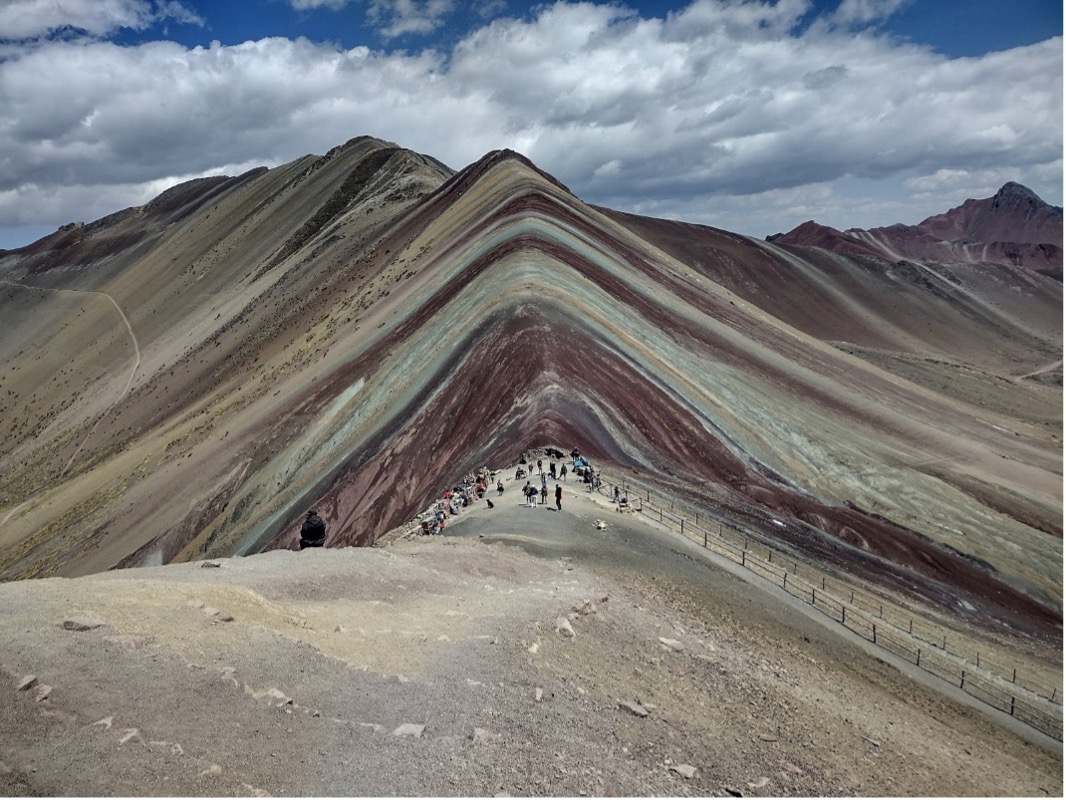
View from the top
There was a little hill just past the viewpoint, so I climbed up that for hopefully the best photo. The picture above hasn't been adjusted or photoshopped. Make your own mind up on whether you think it's worth dedicating a whole day to. For me, it was definitely worth doing as I like hiking. If you don't, you may be able to rent a donkey to get you to the top. (Or just go and visit somewhere else instead!)
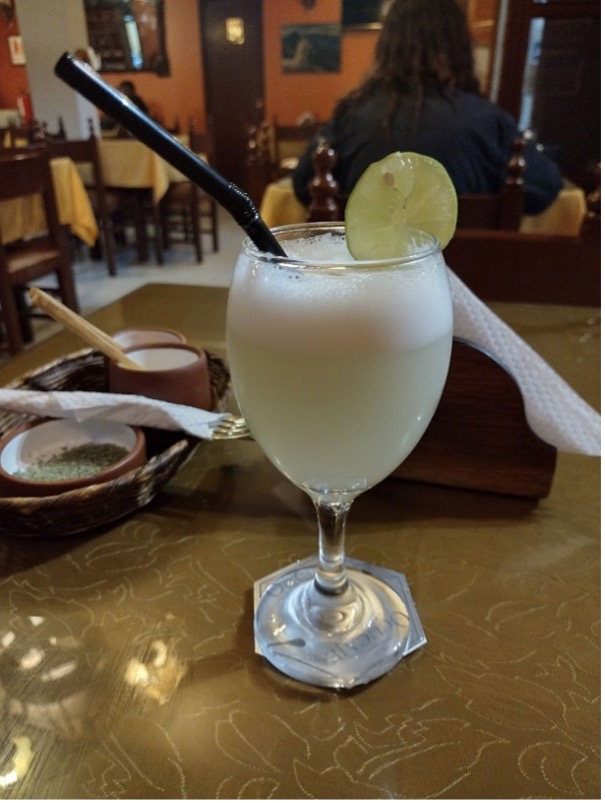
Pisco sour, a favourite Peruvian drink

This was the end of my time in Cusco and I went to the airport and flew to Lima in the morning. There's not much of a choice of destinations from Cusco airport! Nearly every internal flight in Peru connects through Lima.
Day 10 - Lima
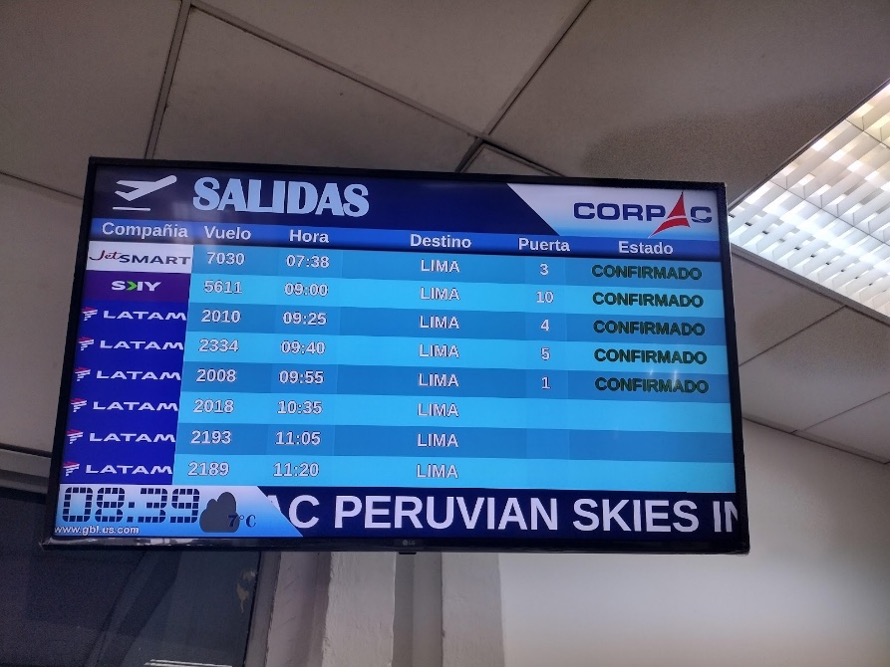
Cusco Airport
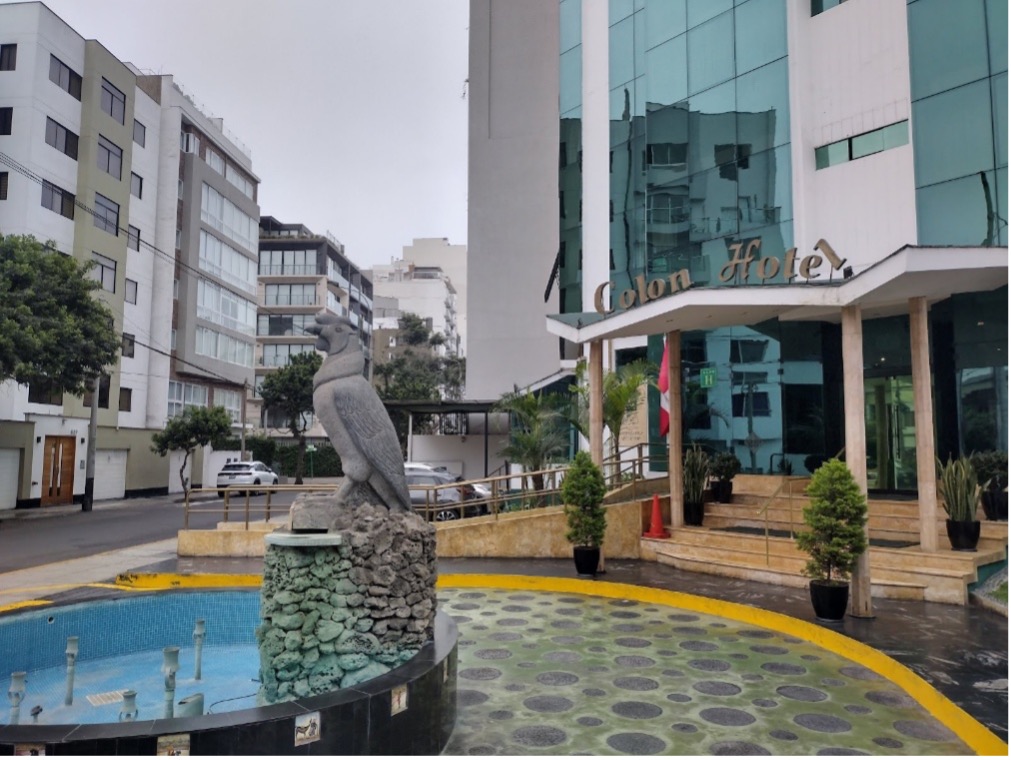
Miraflores Colon hotel
I had booked into a posh 4-star hotel in Lima (only £40/night) just for a nice change after staying in cheapies so far.
I'd love to say that for my last day in Lima I did some exciting cultural or adrenaline type stuff. But I was knackered out from the last few days, so I spent the rest of the day in TGI Fridays and the local shopping centre in Miraflores as well as the hotel.
The next day I went early to the airport to catch the flight home via Madrid.
After doing this trip, Peru is now one of my very favourite countries. Cusco, Arequipa, Colca Canyon, Machu Picchu and Rainbow Mountain were big highlights. The local Inca culture is all around you, and the scenery pretty much everywhere I went was awesome.
I could happily come back one day and spend more time in Cusco, plus visit the Amazon and the Cordillera mountains north of Lima. As well as the coastal desert south of Lima and the Nazca Lines. And keep working on my Spanish - at my age, if you stop, you forget!