
Europe
Brandenburg Gate July 2022
European Destinations
Europe - our home! Although a small continent, traditions, architecture, lifestyles, and food, vary dramatically between countries. Coming from the UK doesn't mean that we automatically know anything about the other 43 countries that we share the continent with. With over 200 different languages spoken, Europe is rich in culture and diverse. Travelling around Europe is fairly easy, with flights, trains, and buses all easy enough to navigate, so go for it!
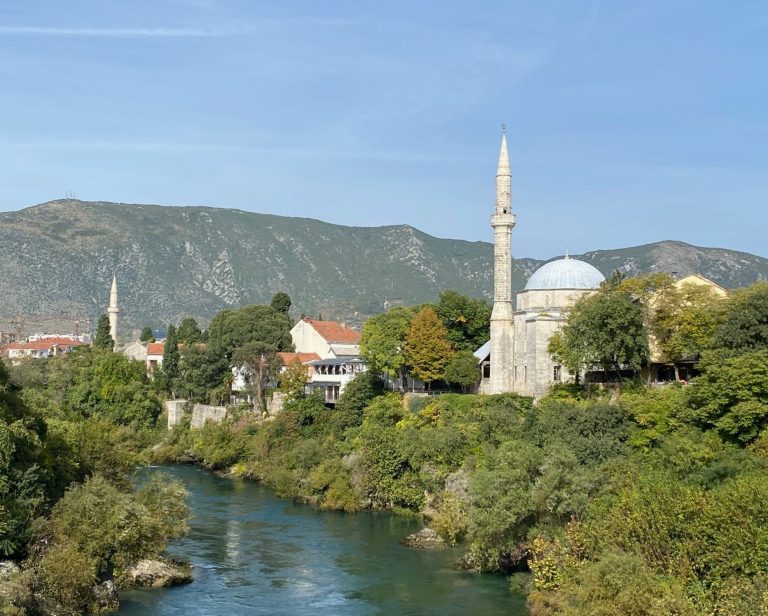
Bosnia & Herzegovina
Počitelj, Mostar & Kravica Waterfalls
A day trip to Počitelj, Mostar, and Kravica Waterfalls, in Bosnia and Herzegovina, from Split. Mostar is around two hours south east of Split (Croatia) and is best know for the Stari Most bridge.
Updated January 2026

Croatia
Split
Split is a coastal city on the Adriatic. Its Old Town is centred around Diocletian's Palace, which is a UNESCO site. We spent a week in Split with a trip to some of the islands, day trips to Krka Waterfalls, and Kravice Waterfall.
Updated December 2025

Germany
Berlin
Second time lucky when it came to visiting Berlin in July 2022, the first time we booked, we came down with COVID the day before. This time we booked a hotel along the route of the Berlin Pride Parade quite by chance, which made for a colourful weekend.
Updated December 2025

Iceland
Southern Iceland Tour
A few days in Reykjavik and Southern Iceland in January 2019 to celebrate a friend's big birthday! We booked a South Shore tour, and the well known Golden Circle tour. Plus no trip to Reykjavik would be complete without a visit to the Blue Lagoon.
Updated January 2026
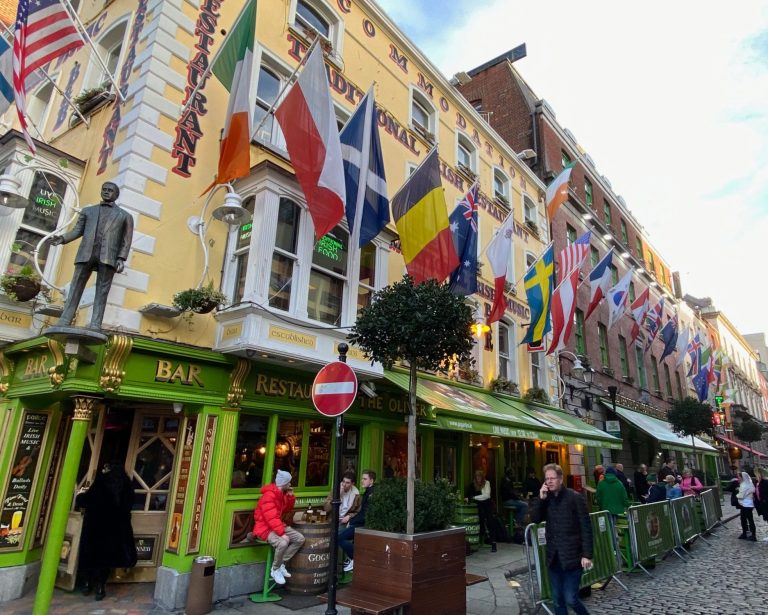
Ireland
Guinness and Whiskey in Dublin
A long weekend with my sister in Dublin visiting the Guinness Brewery at St James's Gate, and cocktail making at the Jameson Distillery.
Added January 2026
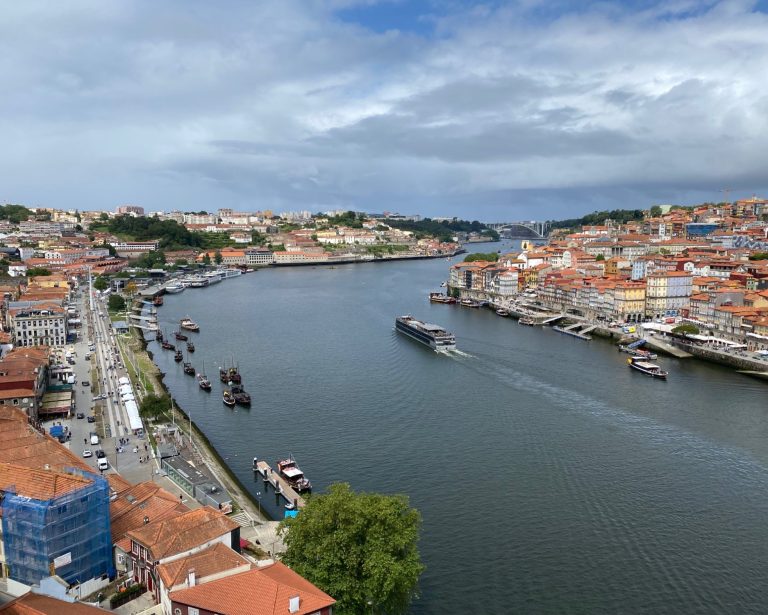
Portugal
Porto Port Tasting
Four days in Porto visiting a couple of port cellars, exploring the city, and finishing with a river cruise along the Douro.
Updated January 2026
Plan your trip to Europe
Travel to the European Union has changed significantly for UK Citizens following Brexit. UK citizens no longer enjoy free movement around Europe. Below are the essentials for a hassle-free trip:

Entering the European Union from the UK
Arriving at a European Airport for the first time since the implementation of the Entry/Exit System (from October 2025)
The European Union's Entry/Exit System (ESS) is a new system that requires British Citizens (and other non-EU nationals) travelling to the Schengen Area to go through extra checks.
The Schengen Area is a system of open borders within Europe which allow citizens of member countries to move freely between those countries.
There are 27 countries in the European Union. Two of these countries are not in the Schengen Area - these are Ireland and Cyprus.
In addition, there are four counties that aren't in the European Union, that ARE part of the Schengen Area - these are Iceland, Norway, Switzerland, and Liechtenstein.
So there are 29 countries in the Schengen Area. The full list is:
Austria, Belgium, Bulgaria, Croatia, Czechia, Denmark, Estonia, Finland, France, Germany, Greece, Hungary, Iceland, Italy, Latvia, Liechtenstein, Lithuania, Luxembourg, Malta, Netherlands, Norway, Poland, Portugal, Romania, Slovakia, Slovenia, Spain, Sweden, and Switzerland.
❗️Allow extra time the first time that you enter the EU after October 2025 as you will need to register your biometric details, which include your fingerprints, and a photo. There have been long queues to do this as people make their first trips since the start of the system.❗️
There is nothing you can do in advance, you will register at the first border. There is no cost for this. You will also no longer need to get hyour passport stamped.
The only other requirement is that your passport must be less than 10 years old and valid for 3 months after departure. The 10-year old bit caused some confusion at first as old British passports issued when we were a part of Europe would be issued for 10 years and what ever time was left on your old passport, this meant that most passports were valid for a little bit more than 10 years. However, once we left Europe, this changed. So, if you still have a maroon passport, don't look at the expiry date, work out the date that is 10 years from the issue date.
Rules for the amount of time you can spend in the Schengen Area (also known as the Schengen Shuffle)
You cannot spend more than 90 days in any rolling 180 day period in the Schengen Area. This includes days in transit. If you need to spend longer in the Schengen Area, you will need to apply for the visa most appropriate for your reasons for the visit.
If you are looking at longer term travel in Europe, its worth keeping records of your entries and exits (there are also apps that can do this for you) to track how many days you have left. If you overstay, you are basically an illegal immigrant, and will be treated as such. I know some longer term travellers, who do the "Schengen Shuffle". This is where, you leave the Schengen Area at the end of the 90 days, and wait it out in a country outside the area, before returning once you are able to. These are mainly long term travellers in campervans or backpackers though, not people flying out a few times per year on city breaks, or beach holidays. If you are spending 90 days in a 180 day period in Europe, you are a pretty hardcore traveller, and none of this should be news to you anyway!
The Entry/Exit System is expected to be a temporary system, before the implementation of the EITAS (European travel Information and Authorisation System) in late 2026. I expect this to be a similar system to the ESTA system for the US, where you have to apply online before you travel.
Health and Security
Foreign and Commonwealth Office guidelines
Keep up to date with Foreign and Commonwealth Office Guidelines for specific country advice, however, you wouldn't expect anywhere in the European Union to be any more dangerous or risky than anywhere in the UK. Take the same precautions as you would at home - don't get yourself into risky situations, protect your valuables from pickpockets - especially in cities, and take extra care when out at night. If something doesn't feel right, don't do it!
Health and Travel Insurance
I would advise that you take out a European (or worldwide) travel insurance policy, even though you can access healthcare in the EU with a GHIC (more on that below), as not all medical assistance will be free. If you are going to be doing anything adventurous, make sure your insurance also covers all these activities. Your insurance should also include delays and missed departures, cutting your trip short, plus baggage delays and loses.
Make sure that you buy your travel insurance as soon as you have booked, not just before you go, in case you need to cancel your trip.
Global Health Insurance Card (GHIC)
For the older readers, this used to be the paper E110 you could get from the Post Office. A GHIC allows you to access state healthcare in the EU, and some other countries, on the same basis as if you were a resident of that country. This doesn't necessarily mena free, but you will be charged the same as a national of that country if there is a charge due.
Applying for a GHIC is free, and they last for 5 years, and you will receive a physical card with an expiry date on. There are lots of fake sites out there who will charge you for a GHIC.
The official site for applying for a GHIC is: Apply for a GHIC
Click here for more information: Get healthcare cover abroad
Public Transport
There are too many different options and public transport systems in Europe to discuss them here. Next time I'm in a European city, I might write an article on it's public transport, as I DO love a metro/underground system! However, one tip, I do want to share, that is either obvious to you, but wasn't to me, or is a little nugget of information that might help you plan your next trip - look at airports nearby in other countries to the place you want to visit as well as the airport you would traditionally fly into. For example, Copenhagen airport in Denmark, and Malmo airport in Sweden are only 35 minutes away from each other by car. What I'm trying to say is that you might find it cheaper to fly into a different European country than the one you actually want to visit!
Here are some resources I use for route planning:
Eurail / Interrail Rail Planner - An app for train schedules and pass management across 33 countries. It works offline for timetable checks.
Omio / Rome2Rio - Best for comparing multiple modes of transport options (bus vs. train vs. flight) when crossing borders.
Driving in Europe
If you have a UK driving licence, you don't need an International Driving Licence (IDP) as well. If you are hiring a car, you will also need to print out a copy of your full licence with any endorsements/create a share code for the hire company to check. Full details here: View or Share your Driving Licence. Don't do it too early though as any document you print, or code you generate is only valid for 21 days.
Don't forget that they drive on the right in most of Europe, except for Cyprus and Malta, who drive on the left as we do in the UK.
If you are bringing your own car over from the UK
Carry all your driving documents with you - your photo driving licence, your V5 logbook for the car, and you motor insurance certificate and schedule - make sure that your policy covers driving in Europe.
Your car must have a UK sticker displayed on the back, and check what you legally need to carry in the car for the countries you are visiting, or driving through. Eg, in Spain you need to carry two warning triangles, and in France, if you are going to be driving in a city, you now need a Crit'Air emission sticker that shows what the emissions levels your car produces. See here for full details - Crit'Air emission sticker.
Make sure you know what you need to carry, and comply with, as each country is slightly different.

Mobile Phones and Plugs
As the "Roam Like Home" rule no longer applies since Brexit, you may incur roaming charges if you don't buy an add-on with your current mobile phone provider, which can be quite expensive, or buy an eSIM from a provider such as Airalo. However, O2, Giff Gaff, and Lebara still offer inclusive EU roaming.
eSIMS are usually much cheaper than your normal provider's add-on. Bear in mind though, that a lot of add-ons or eSIMS are for data only, calls and texts will cost a lot if not included in your plan. Or in my case, texts just don't come through while you are on an eSIM, which if you are relying on SMS for two-factor authorisation for anything this causes problems. Prepare for this if you can by moving any two-factor authorisation you might need while you are abroad to an authenticator app.
Also, depending on which country you are visiting, you may need more than one plug adapter for your chargers etc.
Many European countries use Type C, which is two rounded pins (not grounded), Type E, which is two rounded pins, but is grounded. and Type F, which is also two rounded pins. However, you may come across Type L in Italy, Type J in Switzerland, or Type K in Denmark. Probably best getting one of those multi region adaptors if you are visiting multiple countries.