How to Summit Mount Toubkal: A Guide to Morocco’s Highest Peak
How to summit Mount Toubkal
This is a guide to successfully summiting Toubkal, the highest and most popular mountain in not only the Atlas range and Morocco, but in the whole of North Africa. You would have to go south almost as far as the equator (to Ethiopia in fact) to find a higher peak within Africa.
Morocco is the closest “faraway” country accessible on affordable budget airlines, but has a very different culture and feel to it compared to Europe. Many people are unaware it has one of the most impressive mountain ranges in Africa, suitable for both short and long treks.
Another great thing about attempting this hike is that you can combine it with Marrakech, which is stacked with historic palaces, souks, great cafes and traditional riads, and is well worth a few days of anyone's time.
Why Hike Mount Toubkal in Morocco: 6 Good Reasons
- Accessibility - Toubkal and the High Atlas is only 1-2 hours journey from the pink city of Marrakech, well served by flights from UK and Europe.
- It's not a technical peak - Unlike in the Alps, this is a 4,000m peak you can walk to the top of with no mountaineering skills required (outside of winter).
- The local Berber culture - Distinctly different to the Arabic feel of the cities. High in both hospitality and colour. Women are more visible and play a bigger part in life outside the home.
- The stark rugged beauty of the Atlas range - From the fertile green valleys to the contrasting rocky high peaks.
- It's not overcrowded - Although this is by far the most popular trek in Morocco, there are not the crowds you'd get in Chamonix.
- Possibly best of all, your main rucksack is taken by mules, leaving you free to walk with a small day pack. Trust me this makes a big difference!
Facts about Mount Toubkal
Height: 4,167m
Nearest airport: Marrakech, a 90 minute drive away
Trailhead: The Berber village of Imlil (a bustling and charismatic village well used to hosting hikers). Buses and grand taxis run from Marrakech.
Best time to attempt: April to mid June, or mid September to October. Summer is scorching in the valleys. Come in winter if you want a technical climb in snow and ice, and have previous relevant experience in such conditions (definitely not for beginners).
Climbing Mount Toubkal
Fitness level required: Moderate to good. The usual route is 2 days, the second of which is challenging, but with the right attitude most reasonably fit people will be ok. You don't need to be an Olympic athlete!
Technical skills required: Only in winter (Nov-Mar). Otherwise it's a hike.
Altitude factor: The quick ascent to 4km (as opposed to the height itself) is the main risk factor. However many people feel only minor effects such as shortness of breath. Seven of the nine in my group made the summit.
Other potential difficulties: The path from refuge to summit on day 2 is rough and lined with boulders; there is a lot of scree near the top. Bring strong, worn-in, hiking boots. No trainers!
Can I hike independently? No! This used to be possible but was outlawed in 2018.
The best itinerary for Mount Toubkal to see the sunrise at the summit
Day 1 - join the group in Marrakech in the afternoon, minibus transfer to Imlil, spend the night in a guesthouse at mid altitude (1,900m)
Day 2 - hike from Imlil after breakfast to the refuges at 3,200m. You will arrive there late afternoon and sleep overnight either in tents or (more likely) a huge dormitory inside, sharing with 20-30 others!
Day 3 - up at 4am to leave the refuge and start the hike to the summit. This is the hardest part of the trip. Having summited in time for sunrise, descend the same route, have lunch at the refuge, then walk back down to Imlil. This is a full on day; you'll reach Imlil exhausted by early evening.
Day 4 - in the morning, the minibus takes you back to Marrakech (1.5 to 2 hours travel time)
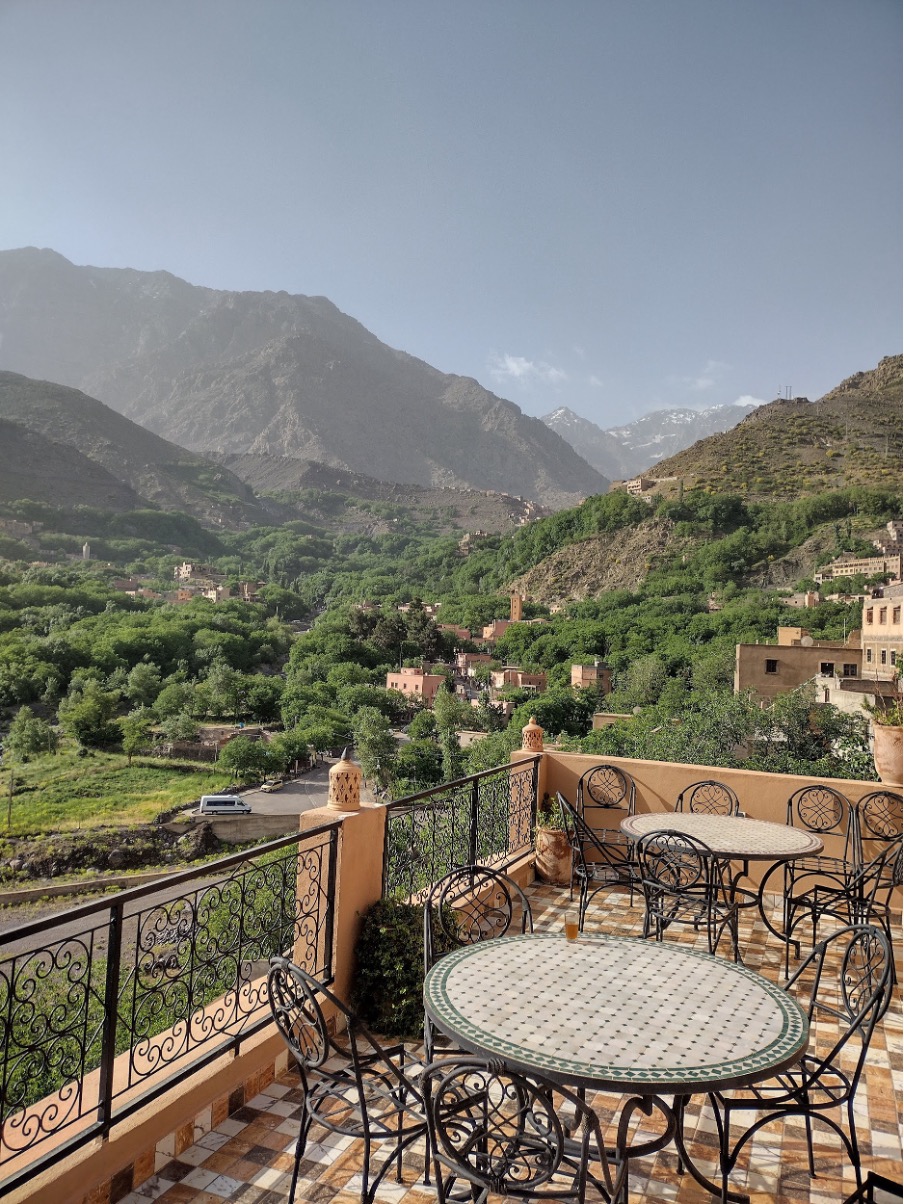
Day 2 - Imlil - at the start of the trail
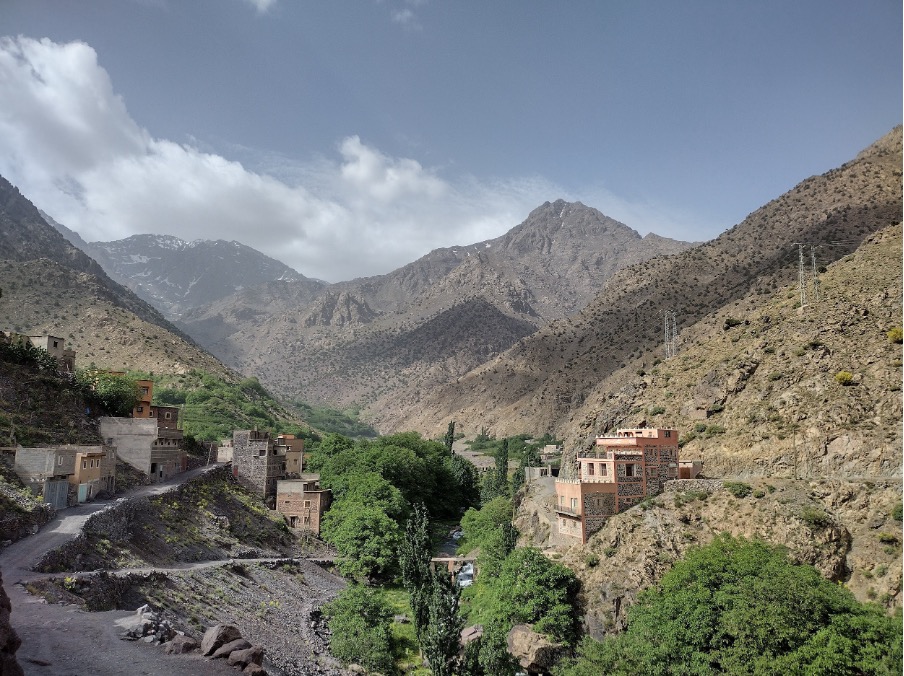
Day 2 - Valley near the start of the trek (May)
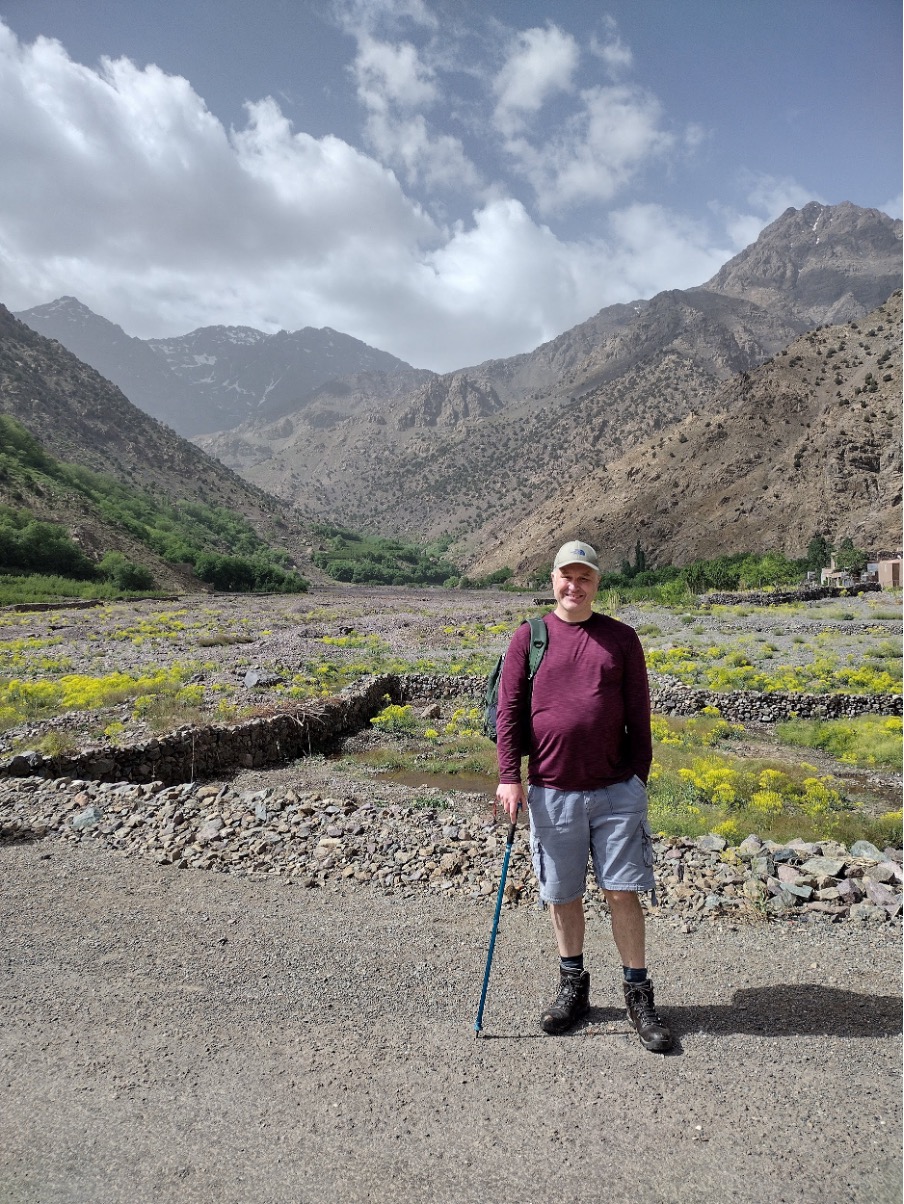
Day 2 - Fairly flat - 90 minutes into the trek
Who should you book with to climb Mount Toubkal?
Several reputable UK operators offer this trek. In all cases I believe they subcontract it to a local Moroccan trekking outfit.
- Much Better Adventures
- KE Adventure Travel
- Skyhook Adventure (I used them for this trip and had no issues)
- Intrepid Travel
- Exodus
It's also a good idea to check third party websites for price comparisons, and other available tours:
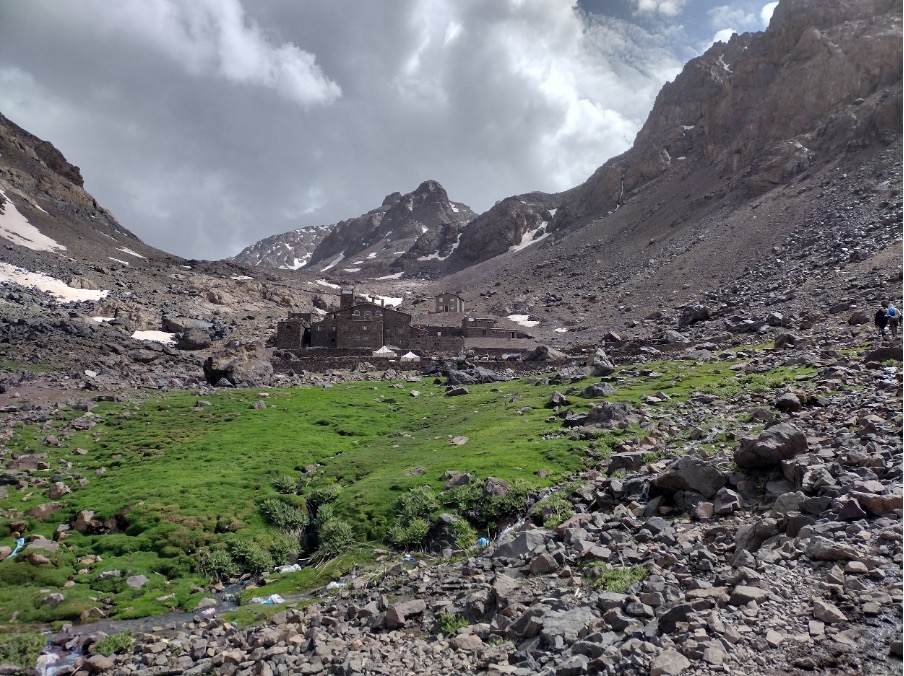
Day 2 - Approaching the refuges on Mount Toubkal
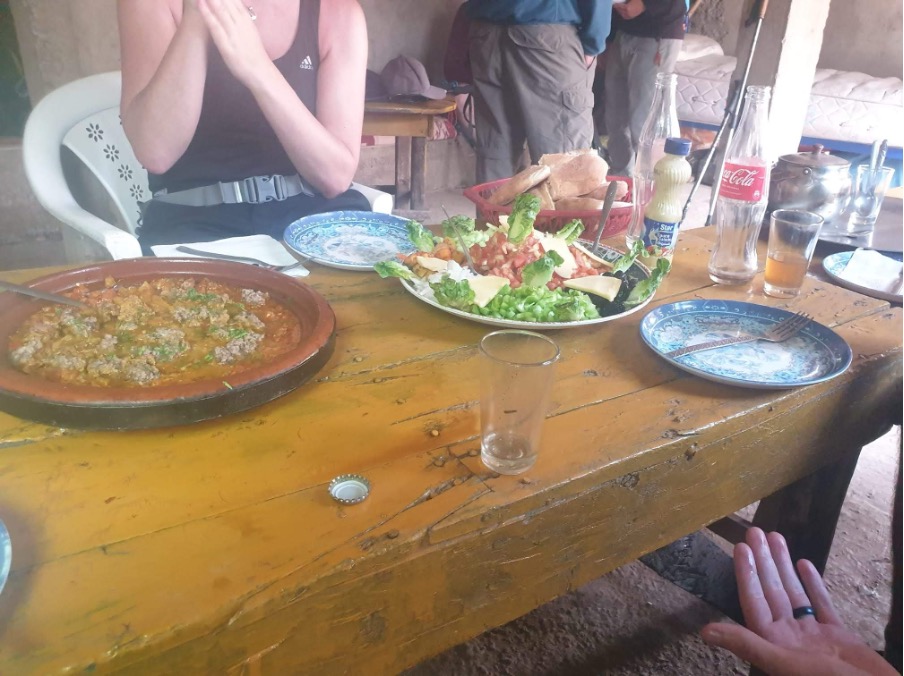
Day 2 - Typical food served at the refuge. Pastas, salads, couscous etc
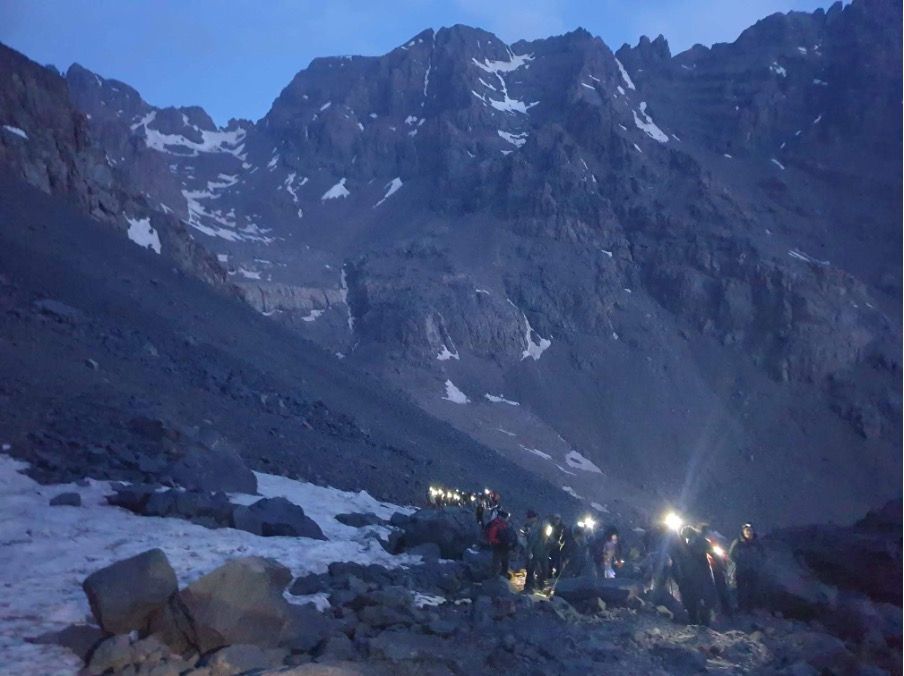
Day 3 - Setting off at 4.30am to reach the summit for sunrise
How much should you budget to climb Mount Toubkal?
Generally this is a good value trek compared to equivalents elsewhere in the world. Morocco's relatively low operating costs, along with the short duration of the trek, keeps prices competitive.
Expect to pay around £350-£550 for the 4 day option described above. This will include transport from Marrakech to Imlil, guiding services, 3 nights accommodation and all meals. It won't include flights, visas, snacks and tips (expected), so budget accordingly.
Alternatively there are longer treks available in the Atlas range which would typically last a week, summiting Toubkal near the end of the week. This can be good for acclimatisation, although you would have to enjoy camping and not be too concerned about frequent showering! Obviously these will cost more than the 4 day package (from £700 upwards).
Who should your local team for climbing Mount Toubkal consist of?
The local team will likely all be Berbers from the area.
Guide - likely to have good English and lots of local knowledge and hiking experience.
Assistant guide - possibly less likely to have good English, but will be a competent hiker.
Chef - will whip up huge, carb heavy meals. The unsung hero. Although he won't walk to the summit with you!
Muleteer - will not walk with the group, will transfer luggage to the refuge via his mules.
Refuge staff - all the behind-the-scenes work running the refuge.
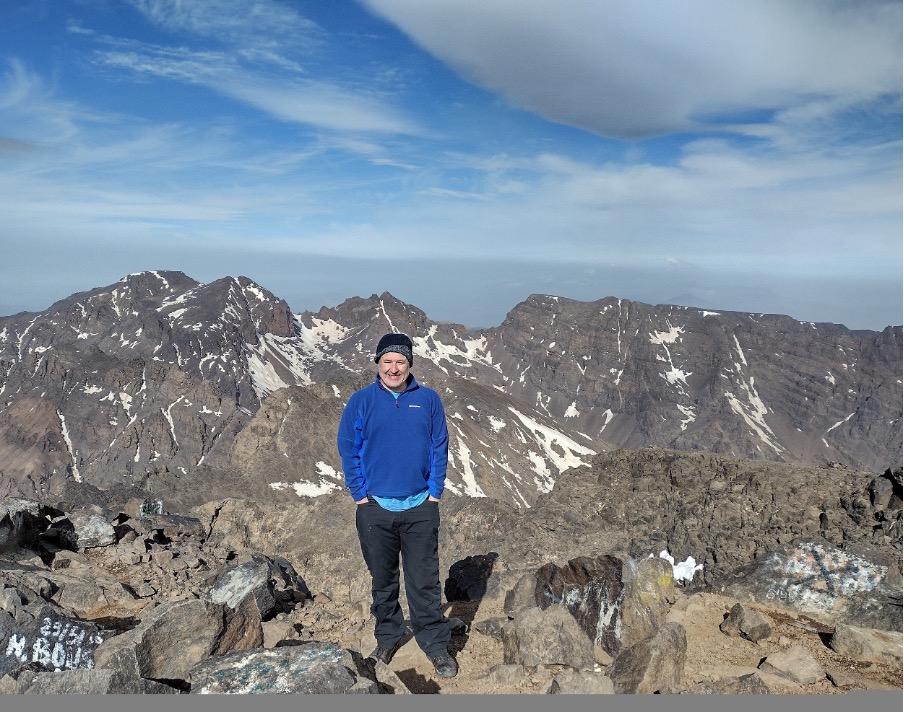
Day 3 - Made it to the summit of Mount Toubkal by 8am
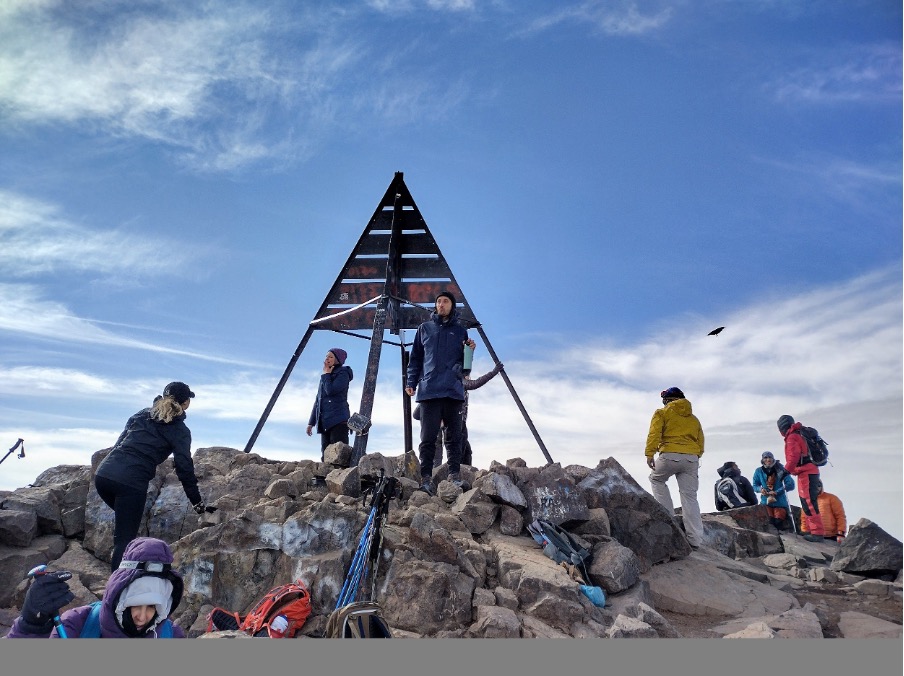
Day 3 - The trigonometric marker designating the summit of the 4,167-metre Mount Toubkal
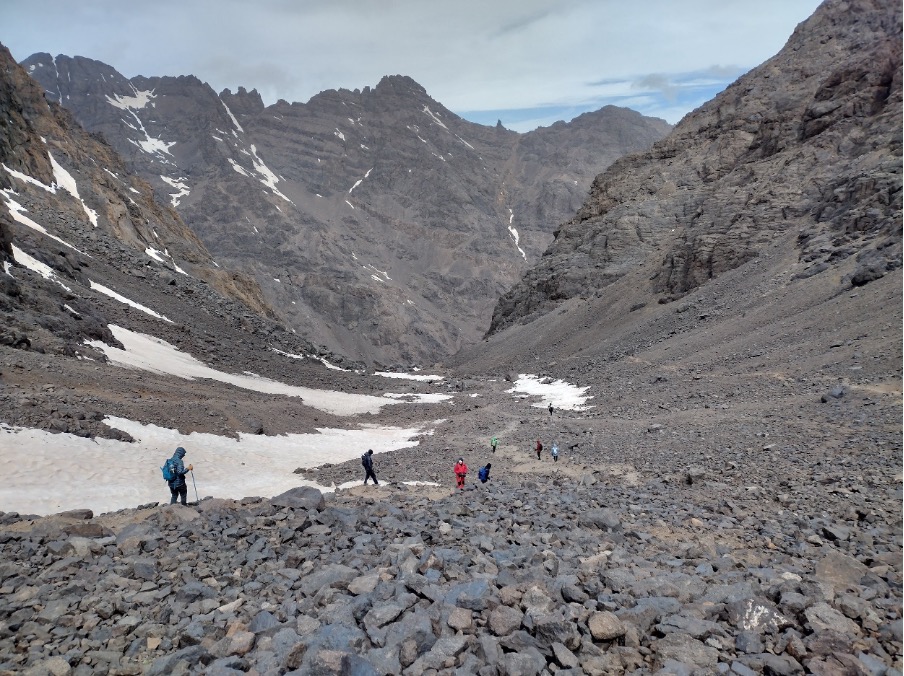
Day 3 - Starting to descend Mount Toubkal by 8.30am
Tips for Summiting Mount Toubkal
Eat lots at mealtimes! Even if your appetite is suppressed by the altitude change, you will still need a LOT of carbohydrates.
Cut your toenails. The front of your boots will get a pounding from all the loose scree. My big toenail took a battering and went a strange colour. It didn't fully recover for over a year!
Do some fitness work a few weeks before. Cross trainers or step machines are ideal.
Wear in your hiking boots before you start the trek. This is not the place to get new boot blisters.
The essentials to pack for your trip to Mount Toubkal
This list is not exhaustive, as everyone has their preferences, but this is the bare minimum:
- Hiking boots and socks
- Spare shoelaces
- Hat and gloves
- Coat suitable for cold weather / strong winds
- Hiking trousers and shorts
- Layered clothes
- Sunglasses
- Sleeping bag
- Suncream
- Lip balm
- Paracetamol or aspirin (for altitude headaches)
- Rehydration powder and diarrhoea relief tablets
- Electrolyte tablets for salt replacement
- Drink bottle
- Snacks
- Camera
- Head torch
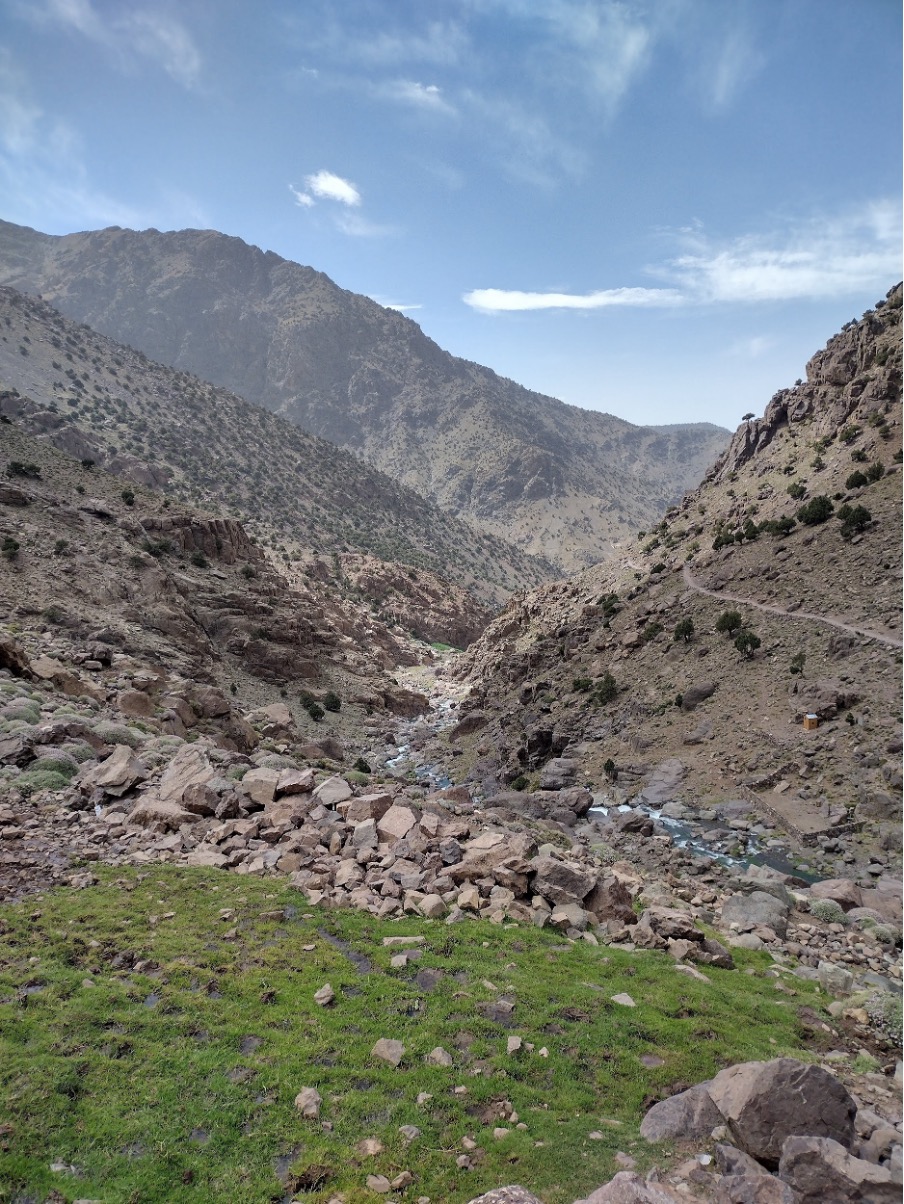
Day 3 - Typical scenery on the way down
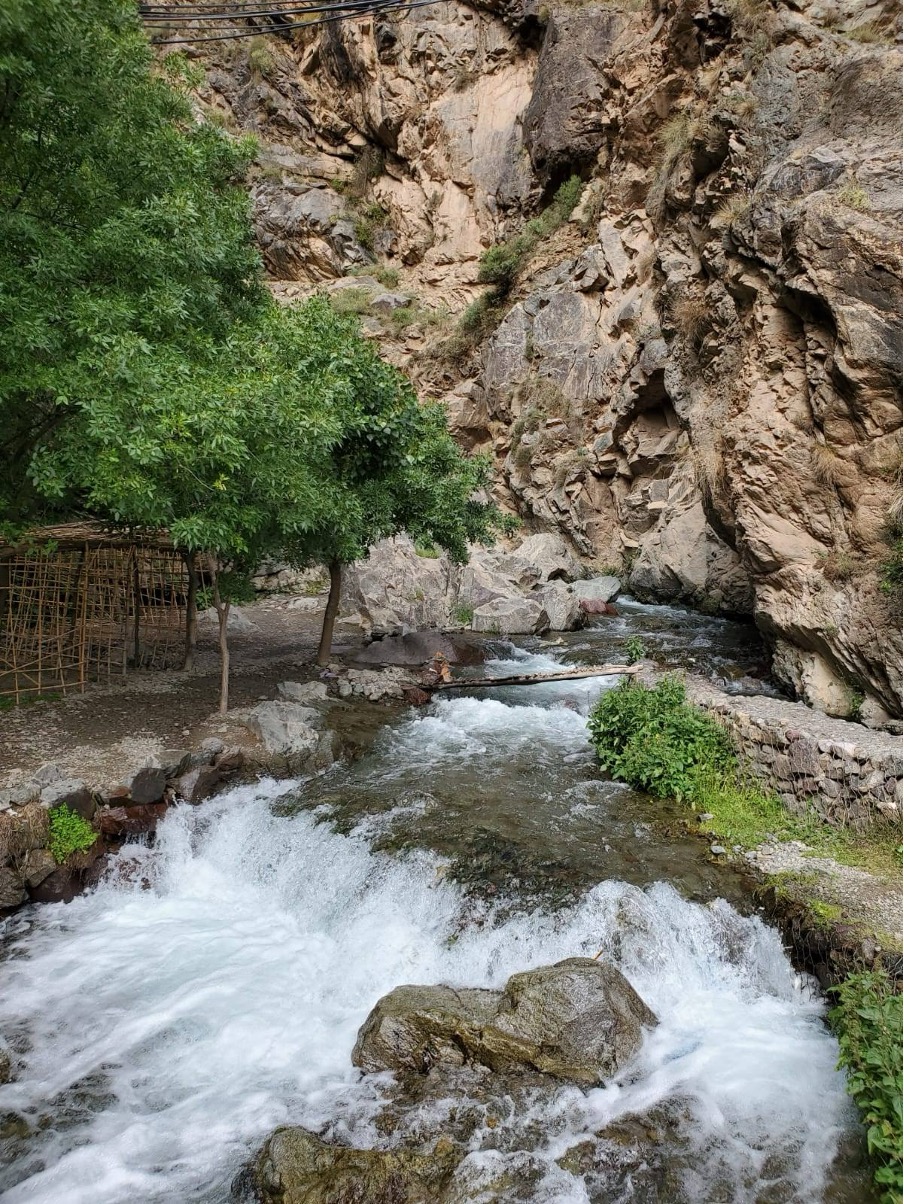
Day 3 - A river in the valley on the descent from Mount Toubkal
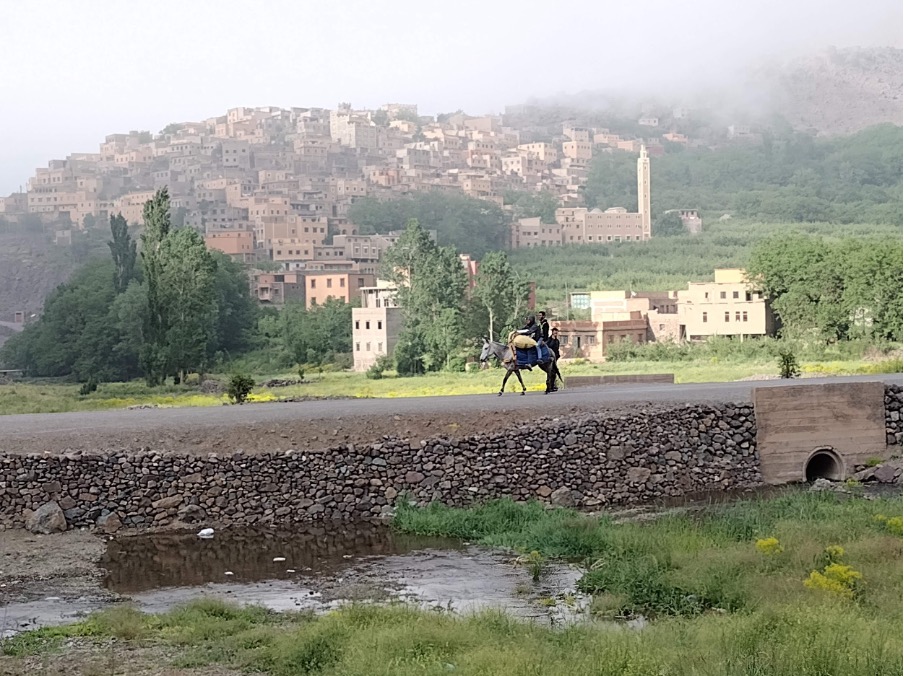
Day 3 - The village of Aroumd, 45 minutes from Imil (and the finish line)
Ready to summit Mount Toubkai?
Check out the tours and treks in the links above go for it.
This is a bucket list trip for many trekkers, at a fraction of the time and cost of Kilimanjaro, Patagonia or the Alps. If you decide to do it, prepare well and do your research to ensure the trekking company is reputable. And most of all, definitely cut your toenails!